 listicle
Best Luxury Home Sauna Brands for Recovery in 2026
Table of Contents
- Best Luxury Home Sauna Brands for Recovery in 2026
- Quick Comparison: Luxury Home Sauna Models and Prices
- Infrared vs. Traditional Sauna: Which Heats Recovery Better?
- Best Two-Person Home Sauna Models for Recovery
- Using a Sauna After Workout: Timing and Routine
- Home Sauna Cost: Purchase Price, Installation, and Ownership
- Safety, Contraindications, and Long-Term Usability
- Conclusion: Choosing Your Recovery Sauna
- Frequently Asked Questions
Last Updated: October 13, 2026
Best Luxury Home Sauna Brands for Recovery in 2026
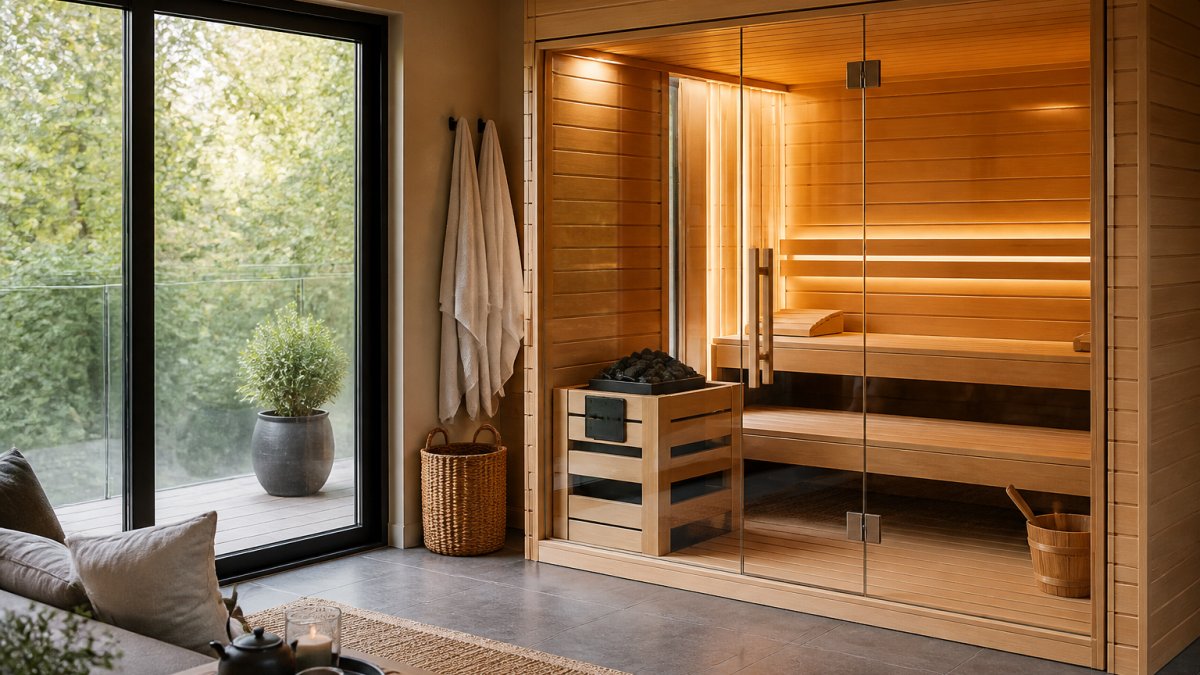
A luxury home sauna is a dedicated heat-therapy room built into a residence for recovery, relaxation, and daily wellness, and the best luxury home sauna brands for recovery in 2026 are the ones that pair credible heat engineering with honest specifications. Retreat Elite curates wellness pieces for exactly this kind of room, and we built this guide around one question: which sauna actually helps you recover, and which one just looks the part?
The recovery-first lens changes the ranking. Most buying guides sort saunas by price or wattage. We sort by what happens after a hard training session or a long day: how evenly the cabin holds heat, how quickly it reaches temperature, and whether the manufacturer publishes verifiable specifications. Where a claim cannot be checked, we say so. That is the difference between a wellness purchase and an expensive piece of furniture.
How We Evaluated These Saunas for Recovery
We scored each model on five recovery-focused criteria, then weighted them by how much they affect a real session.
- Heat type and distribution: Does the cabin produce even heat, or hot spots near the elements?
- Temperature range and heat-up time: Published maximums and warm-up windows, not marketing language.
- Capacity and ergonomics: Two-person comfort, bench depth, and how the layout supports a full session.
- Construction and materials: Wood species, heater count, glass thickness, and insulation.
- Ownership reality: Electrical requirements, warranty length, and service access.
What most guides miss is that heat-up time matters more than peak temperature for recovery. A cabin that reaches a comfortable range in ten minutes gets used nightly. One that takes an hour gets used twice a month. We weighted accordingly.
Quick Comparison: Luxury Home Sauna Models and Prices
| Model | Heat Type | Capacity | Best For |
|---|---|---|---|
| Blisspod Bergen | Full-spectrum infrared + red light | 2 | Red light therapy and full-spectrum coverage |
| Blisspod Venetian RED | Full-spectrum infrared + red light | 2 | All-in-one therapy with Wi-Fi control |
| Thermora Pandora | Full-spectrum infrared + red light | 2 | Salt therapy and value |
| Thermora Valen | Far-infrared | 2 | Lowest entry price, panoramic glass |
| Rövia Luma | Hybrid infrared + 3.5kW steam | 2 | Switching between dry and humid heat |
| Finnmark FD-2 | Full-spectrum infrared | 2 | Touchscreen control and deep heat |
| Rövia Elvaria | Hybrid infrared + 6kW Harvia steam | 4 | Households and shared recovery |
| ThermaSol Fortis | Traditional steam, outdoor | 4 | Backyard installation |
Infrared vs. Traditional Sauna: Which Heats Recovery Better?
Infrared saunas heat the body directly with radiant energy, while traditional saunas heat the air and rely on steam and humidity. For recovery, that difference shapes everything: session length, comfort, and how the heat reaches sore muscle.

Infrared cabins typically run cooler on the air but warmer on the tissue, which is why many people find a 30-minute infrared session more tolerable than a short, intense traditional round. Full-spectrum infrared adds near and mid wavelengths to the far-infrared band, which the manufacturers describe as reaching soft tissue and circulation rather than only the skin surface.
Traditional steam, by contrast, delivers the humid heat and steam that many people associate with a Scandinavian sauna. The trade-off is a longer heat-up and a heavier installation.
- Choose infrared if you want frequent, shorter sessions and a plug-in-friendly install.
- Choose traditional steam if you want the classic humid experience and have the electrical capacity.
- Choose hybrid if you want both without buying two cabins.
The honest answer: neither is universally better. Match the heat to the routine you will actually keep.
Best Two-Person Home Sauna Models for Recovery
Two-person cabins are the sweet spot for recovery at home: large enough for a partner or a stretch-out session, small enough to fit a wellness room. Here are the models we recommend, starting with our top pick.
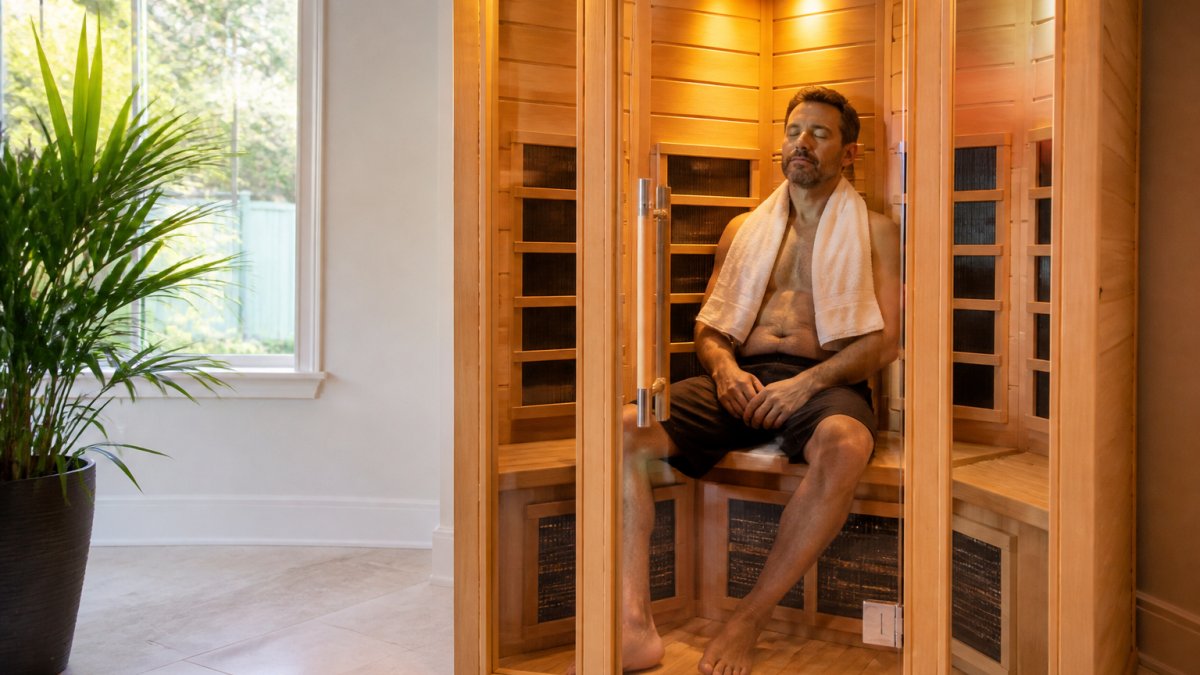
Blisspod Bergen and Venetian RED: Full-Spectrum Infrared With Red Light
Our top pick for recovery is the Blisspod Bergen, a full-spectrum infrared sauna with an extra-large red light therapy panel positioned directly in front of the body.
The recovery case is straightforward. Full-spectrum coverage spans near, mid, and far infrared, and the front-facing red light panel means you get light therapy and heat in the same session rather than choosing one. The Bergen carries a 3-year warranty on wood structure, heating elements, and electrical.
The Blisspod Venetian RED, also $4,999, pushes further with ten heaters, individual heat-intensity controls on the back full-spectrum heaters, Wi-Fi remote control, chromotherapy LED strips, and reflexology foot heating. If you want the most adjustable cabin in this group, this is it.

Thermora Valen and Pandora: Far-Infrared Value
The Thermora Valen is the lowest-priced cabin here at $3,199.97, and it makes a clear case for itself. It uses 2000W mica carbon far-infrared heating with a published range of 113-122°F optimal and up to 149°F maximum, a preheat time of about ten minutes, and 8mm tempered glass with a panoramic front.
The Thermora Pandora at $3,899.97 adds a 12"x12" red light therapy panel, Himalayan salt panels that release negative ions, and a 2000-watt system with six mica carbon panels that heats in roughly ten minutes. Assembly takes about an hour, and it runs on a standard 120-volt outlet with a dedicated 20-amp breaker.
Where these two fall short: neither offers steam, and the far-infrared-only Valen covers a narrower wavelength band than the full-spectrum models. For pure far-infrared heat at a lower entry price, that is a fair trade.
Rövia Luma and Finnmark FD-2: Hybrid and Full-Spectrum Options
The Rövia Luma at $5,999.97 is the hybrid pick. It combines far-infrared dry heat with a 220V/3.5kW traditional steam heater, five carbon fiber panels, three red light tubes, seven therapeutic light settings, and an oxygen bar. It seats two and supports up to 700 lbs. If you cannot decide between infrared and steam, this cabin removes the decision.
Blisspod | Bergen | Full Spectrum Ultimate Indoor Sauna | Red Light Therapy | 2 →
The Finnmark FD-2 at $6,399.97 is the full-spectrum specialist. It blends long-wave Carbon 360 panels with short-wave Spectrum Plus panels, reaches 170°F in under an hour, plugs into a standard outlet, and uses an antimicrobial Western Canadian cedar interior. A built-in LCD touchscreen and six-inch HiFi speakers handle control and audio.
For households rather than couples, the Rövia Elvaria at $11,399.97 seats four with Canadian red cedar, a 6kW Harvia heater, full-spectrum infrared, starry-sky ceiling lighting, and Wi-Fi control.
Using a Sauna After Workout: Timing and Routine
Use a sauna after a workout once your heart rate has settled and you have rehydrated, typically 15 to 30 minutes after you finish training. Going in immediately after intense effort stacks heat stress on top of exercise stress, which is the opposite of what recovery wants.
A routine that works for most people:
- Cool down and stretch for 10 minutes.
- Drink water, and add electrolytes after a long or sweaty session.
- Enter the sauna for 15 to 20 minutes at a moderate setting.
- Exit, cool off gradually, and rehydrate again.
- Repeat a second round only if you feel good, not because a protocol says so.
Session length should follow the cabin, not a fixed rule. The Thermora Valen documentation suggests 15-20 minutes in summer and 25-30 minutes in winter, which reflects how ambient conditions change what your body tolerates.

Home Sauna Cost: Purchase Price, Installation, and Ownership
Home sauna cost breaks into three parts: the cabin, the electrical work, and the ongoing cost of running it. The purchase price is the number on the page, but it is rarely the whole number.
| Cost Component | What It Covers | Notes |
|---|---|---|
| Cabin | The sauna unit itself | $3,199.97 to $52,399.97 across this range |
| Electrical | Dedicated circuit, wiring, breaker | Models range from 120V/15-20A to 220V |
| Installation | Assembly or professional build | Most two-person cabins assemble in about an hour |
| Delivery | Freight and placement | Free U.S. shipping on most Retreat Elite orders |
| Operation | Electricity per session | Higher for steam and 4-person cabins |
Two details drive the electrical line item. The Thermora Pandora needs a dedicated 20-amp breaker on a standard 120-volt outlet. The Rövia Luma uses a 220V/3.5kW heater, which means a different circuit entirely. The Blisspod Bergen draws 2100 watts of heaters plus 273 watts of red light on a 120-volt, 20-amp rating. Plan the circuit before you plan the room.
Safety, Contraindications, and Long-Term Usability
Sauna safety comes down to hydration, session limits, and knowing when heat is the wrong tool. Every manufacturer in this group publishes the same core guidance: hydrate before and after, and consult a doctor first if you have low blood pressure or a heart condition.
Long-term usability is where luxury cabins separate. Consider these before you buy:
- Warranty length: The Blisspod Bergen and Venetian RED carry 3-year coverage on wood, heating panels, and electrical. The Milano carries 2 years.
- Service access: Confirm who handles parts and support before delivery, not after a heater fails.
- Wood and finish: Canadian hemlock and red cedar are the common choices here. The Bergen uses a darker exterior laminate with no toxic paint.
- Electrical fit: Verify your panel can support the circuit before ordering.
- Space and clearance: Check outer dimensions against your room, not just the footprint you imagine.
For accessibility, think about the door width and step-in height now.
Conclusion: Choosing Your Recovery Sauna
The hard part is not picking a sauna. It is predicting which one you will still use in month six, when the novelty has worn off and only the routine remains. That answer depends on heat-up time, comfort, and how well the cabin fits the space you actually have.
At Retreat Elite, we help you work through those details before you commit, with clear product information, dimensions, and specifications, plus expert help by phone and email if you want a second opinion on electrical requirements or room fit. Browse our sauna collection, or reach out and we will help you match a cabin to your recovery routine and your home.
Frequently Asked Questions
What should I look for in a luxury home sauna for recovery?
Focus on heater type and coverage, temperature range, and construction. Full-spectrum infrared models like the Blisspod Bergen combine near, mid, and far infrared with a red light therapy panel, while far-infrared units such as the Thermora Valen reach up to 149°F. Check heater count and placement, wood quality (Canadian hemlock and cedar hold heat well), low EMF ratings, and warranty length. For recovery, red light therapy panels and adjustable temperature control matter more than cabin size.
How much does a high-end home sauna cost?
In the Retreat Elite catalog, two-person infrared saunas start at $3,199.97 for the Thermora Valen and run to $6,399.97 for the Finnmark FD-2. Hybrid infrared and steam models like the Rövia Luma sit at $5,999.97, while the Rövia Elvaria 4-person reaches $11,399.97. Outdoor cabins and traditional spruce kits climb higher, with the ThermaSol Fortis at $52,399.97. Budget for electrical work and assembly on top of the purchase price.
Are infrared or traditional saunas better for recovery?
Infrared saunas heat your body directly at lower air temperatures, typically 113-149°F, which many people find easier to tolerate for longer sessions. Traditional saunas use heated stones and steam at higher temperatures. For muscle soreness and post-workout recovery, infrared's deeper radiant heat and shorter heat-up times (about 10 minutes on the Thermora Valen) make it a practical daily option. Hybrid units like the Rövia Luma let you switch between both.
How long should you use a sauna after a workout?
Wait 10 to 15 minutes after training so your heart rate settles, then aim for 15 to 30 minutes per session. The Thermora Valen recommends 15-20 minutes in summer and 25-30 minutes in winter. Hydrate before and after, and keep the temperature moderate on hard training days.