 how-to
Integrating Home Bar Into Modern Living: A 2026 Guide
Table of Contents
- Plan the Space: Spatial Planning for a Modern Home Bar
- Choosing High Quality Home Bar Cabinets for Your Space
- Modern Home Bar Design Ideas That Fit Contemporary Aesthetics
- Lighting Design for Ambiance: Pendant Lighting and Accent Lighting
- Integrating a Home Bar Into an Open-Concept Living Room
- Smart Home Integration and Sustainable Bar Materials
- Conclusion
- Frequently Asked Questions
Last Updated: September 25, 2026
Plan the Space: Spatial Planning for a Modern Home Bar
Integrating a home bar starts with spatial planning, not shopping. Measure first, then choose.
At Retreat Elite, we see the same mistake often. Homeowners buy a beautiful cabinet before they know where it fits. Then it sits in the garage for a month.
Start with three numbers: wall length, walkway width, and ceiling height. A bar needs about 36 inches of clear walkway behind it.
A common mistake is ignoring the "work triangle." Your fridge, prep surface, and sink should sit within two steps of each other.
Small Space Solutions and Hidden Bar Options
Small rooms still work. A hidden bar is the smartest move for tight floor plans. It folds, tucks, or slides away when not in use.

Options that work well in small spaces:
- A slim bar cart you roll out for parties
- A wall-mounted cabinet that doubles as art
- A converted closet with interior shelving
- A console table with hidden bottle storage
The goal is function without clutter, intentional, not squeezed in.
Ergonomic Workflow: The Mixology Station Layout
A mixology station is a dedicated zone where you build drinks, store tools, and keep ice within arm's reach. Get it right and hosting feels effortless.
Think in zones: ice and glassware closest to where you pour, spirits and mixers one step back, tools within reach.
Here's the sequence most hosts use:
- Grab glass and ice
- Add spirit
- Add mixer
- Garnish and serve
Arrange your station in that exact order. You'll move less and spill less.
Choosing High Quality Home Bar Cabinets for Your Space
High quality home bar cabinets are built from solid wood, not particle board wrapped in veneer. They hold weight, resist moisture, and last decades. That matters when you're storing glass and bottles long-term.
Look at three things: material, joinery, and finish. Solid mango or oak beats composite, dovetail joints beat staples, and a sealed finish protects against spills.
Retreat Elite carries several options worth considering.
Bar Cart vs. Built-In Cabinetry
A bar cart is mobile, affordable, and easy to move. Built-in cabinetry is permanent, adds property value, and holds more.
| Feature | Bar Cart | Built-In Cabinetry |
|---|---|---|
| Cost | Lower | Higher |
| Mobility | Yes | No |
| Storage | Limited | Extensive |
| Best For | Renters, small spaces | Long-term homeowners |
Modern Home Bar Design Ideas That Fit Contemporary Aesthetics
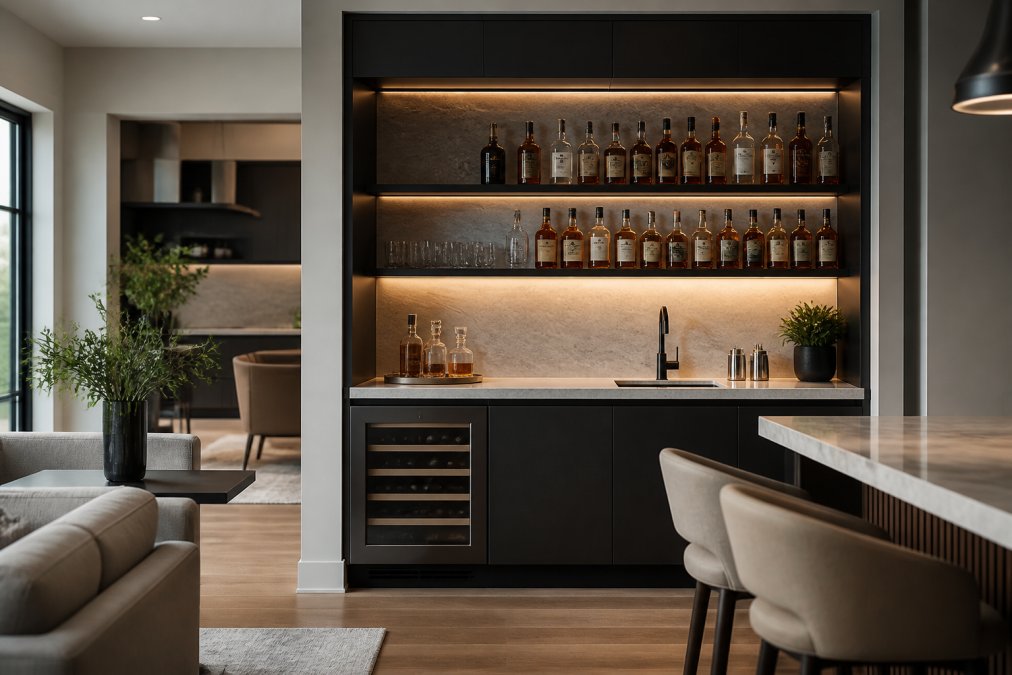
Modern home bar design ideas lean clean, warm, and uncluttered: straight lines, natural materials, and one bold statement piece. Skip the heavy ornamentation.
Countertop Materials, Backsplash, and Hardware Finishes
Countertop choice affects looks and upkeep. Marble stuns but stains, quartz resists stains and needs less care, and butcher block warms a space but needs sealing.
Lighting Design for Ambiance: Pendant Lighting and Accent Lighting
Lighting design for ambiance comes down to layers: task light for pouring, ambient light for the room, and accent light for drama. What separates a styled bar from a merely lit one is getting color temperature, lumens, and control right.
Custom Beautifully Carved Teak Counter →
Pendant Lighting Over the Bar
Pendant lighting works best over the bar itself. Hang two or three in a row, with the bottom of each about 30 to 36 inches above the countertop, high enough to see across, low enough to feel intentional.
Accent Lighting That Adds Depth
Accent lighting adds depth. Options include:
- LED strip lights under shelves (warm-white, not RGB, unless you want party mode)
- Backlit bottle displays
- Warm sconces on side walls
- Dimmable bulbs throughout
Under-shelf LED strips are the highest-impact, lowest-cost accent layer. Mount them at the front edge of the shelf, not the back, so light washes the bottles and wall behind them. A 2700K strip at roughly 60 LEDs per foot gives an even wash without hotspots.
Smart Lighting: The Angle Most Guides Skip
Smart home integration is where modern bar lighting pulls ahead, and it's the piece most design articles leave out. A few upgrades change how the bar functions day to day:
- Smart LED strips that shift color and brightness by voice or app, so the same strip can be warm-white for dinner and deep amber for a party.
- Motion-sensor lighting inside cabinets so the interior lights when the door opens, no fumbling for a switch with both hands full.
- Scene control that ties the bar pendants, under-shelf strips, and room ambient lights into one button: "prep," "host," and "wind down."
- Dimmable smart bulbs on a schedule so the bar isn't blazing at 11 p.m.
Integrating a Home Bar Into an Open-Concept Living Room
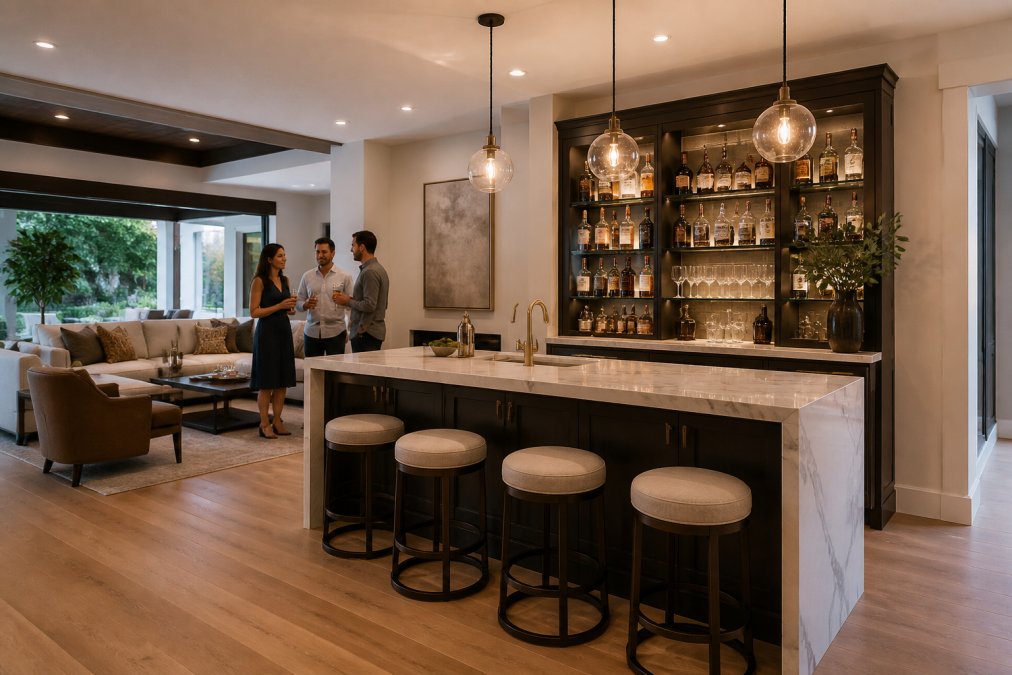
Open-concept living creates one big room for cooking, dining, and relaxing, and a bar must fit that flow without blocking it. The trick is defining the bar zone without walls, while still letting you make a drink without walking the length of the house.
Define the Zone Without Walls
Use a rug, a change in flooring, or a ceiling beam to mark the bar area, cues that tell the eye "this is a separate space" without a single wall. A rug is the most flexible option; a flooring change is the most permanent and expensive.
The Bartender's Triangle: The Layout Rule Most Guides Skip
Here's the angle almost no home-bar article covers: the bar has its own work triangle, just like a kitchen. In a kitchen it's sink-stove-fridge; at a bar it's ice-prep surface-spirits. Get it right and hosting feels effortless; get it wrong and you're walking around your own bar all night.
- Grab glass and ice
- Add spirit
- Add mixer
- Garnish and serve
Clearance and Walkway Widths That Actually Work
A bar needs about 36 inches of clear walkway behind it; anything less feels cramped when guests gather. In an open-concept room that walkway is shared with kitchen and dining traffic, so measure the combined path, not just the bar's own clearance.
Bar Stools and Seating That Define the Entertaining Space
Bar stools do more than seat guests. They signal where the entertaining space begins. Choose stools that match your bar height.
Standard heights:
- Counter height: 34 to 36 inches
- Bar height: 40 to 42 inches
- Extra-tall: 44 to 46 inches
Smart Home Integration and Sustainable Bar Materials
Smart home integration is the angle most guides skip, and where modern bars pull ahead. Simple upgrades make hosting easier.
Ideas worth trying:
- Smart LED strips that shift color with a voice command
- A beverage center with app-based temperature control
- Motion-sensor lighting inside cabinets
- A smart speaker for music and timers
Conclusion
Planning a bar that fits your space, style, and budget takes thought up front, but the payoff is a room you actually use, not one you admire from a distance.
Frequently Asked Questions
How do you integrate a home bar into a small living room?
Focus on vertical storage and multi-purpose pieces. A wall-mounted cabinet or a compact bar cart keeps the footprint small while still providing a dedicated mixology station. Choose a unit with adjustable shelves and built-in glass holders to maximize every inch. If space is tight, a hidden bar that folds away or a cabinet that doubles as a console table lets you entertain without sacrificing living area.
What are the essential features of a modern home bar?
A functional modern home bar includes a dedicated countertop for mixing drinks, organized storage for bottles and glassware, and thoughtful lighting. Look for cabinets with adjustable shelves, wine racks, and stemware holders. A small beverage center or mini fridge keeps ingredients cold. Pendant or accent lighting sets the mood, while a durable surface like marble or wood stands up to regular use. Ergonomic layout matters too: keep ice, tools, and spirits within easy reach.
How do I choose the right location for a home bar in an open-concept floor plan?
Place the bar where it serves the flow of entertaining without blocking traffic. A corner near the kitchen or between the living and dining zones works well. Consider plumbing access if you want a wet bar, and ensure electrical outlets for a beverage center or lighting. The bar should feel like a natural extension of the gathering space, not an afterthought. Measure your available wall space and leave clearance for bar stools and serving.
Do high-quality home bar cabinets increase property value?
A well-designed home bar can be a selling point for buyers who entertain, though its impact on resale depends on your market and the quality of the installation. Built-in cabinetry with premium materials and smart storage tends to appeal more than freestanding pieces. If you are renovating, choose timeless finishes and functional layouts that future owners will appreciate. The primary value is in how the space supports your lifestyle now.