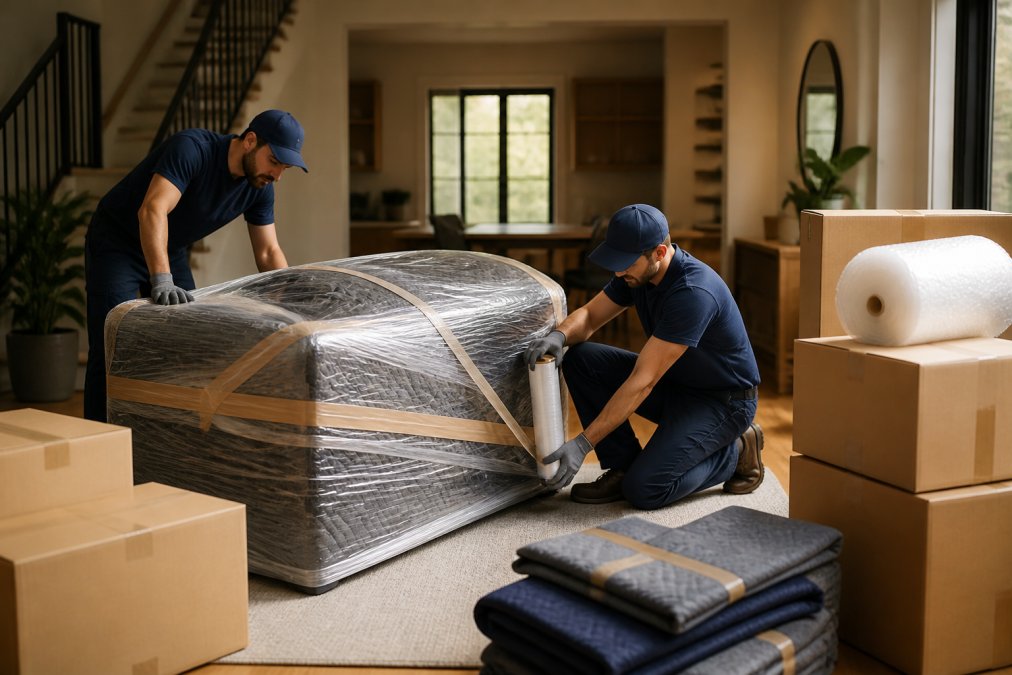
 how-to
Shipping Heavy Home Goods Safely: A Complete Guide
Table of Contents
- Why Shipping Heavy Home Goods Requires Special Care
- Step-by-Step Packing Guide for Heavy Items
- Choosing the Right Freight Carrier
- Freight Shipping Insurance and Liability Coverage
- What to Do If Furniture Arrives Damaged
- Delivery Scheduling and Transit Timeline Expectations
- Frequently Asked Questions
Last Updated: September 26, 2026
Why Shipping Heavy Home Goods Requires Special Care
Shipping heavy home goods safely differs fundamentally from lightweight packages. Furniture, wellness equipment, and entertainment pieces arrive damaged because shippers underestimate transit forces: jolts, vibrations, temperature swings, and compression stresses.
The difference between perfect arrival and damage comes down to three things: how you pack it, who ships it, and what coverage you have. Get any one wrong, and you face a damaged investment and weeks of carrier disputes.
Step-by-Step Packing Guide for Heavy Items
Packing heavy home goods safely requires the right materials, proper technique, and weight distribution. Most damage occurs during packing, not transit.
Gathering the Right Packaging Materials
Start with these essentials before you begin wrapping anything:
- Heavy-duty boxes rated for at least 65 pounds, Use 32 ECT (Edge Crush Test) for standard items, 48 ECT for items over 100 pounds, or double-box for extra protection.
- Kraft paper and packing paper, Use kraft paper (not newspaper) for moisture protection and to prevent finish damage.
- Plastic wrap and stretch film, Use 80-gauge stretch film for moisture sealing and layer retention.
- Foam sheets, corner protectors, and edge guards, Use 1-inch corner protectors for items over 200 pounds and 2-3 inch foam sheets for impact absorption.
- Packing peanuts or kraft paper crinkle fill, Use kraft paper crinkle fill (recyclable, no static). Apply 4-6 inches on all sides inside the box.
- Heavy-duty packing tape, Use 2-inch width minimum, rated for 60+ pounds. Test-seal before shipping.
- Wooden pallets or skids for extremely heavy pieces, Standard 48×40-inch pallets (2,500-pound rating) are essential for items over 300 pounds.
- Bubble wrap in multiple thicknesses, Use 5/16-inch for delicate surfaces, 3/8-inch for general protection. Avoid 1/4-inch for heavy items.
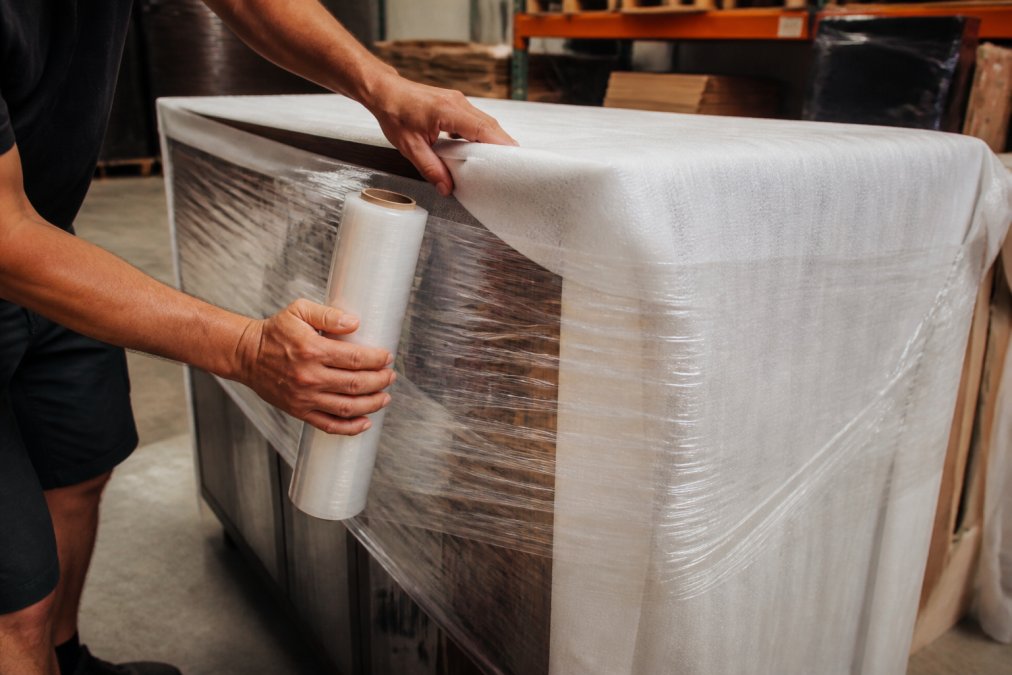
The Packing Sequence: Layer by Layer
Step 1: Prepare the item. Remove legs, shelves, or detachable components. Wrap separately in kraft paper and label clearly. This reduces weight and prevents shifting.
Step 2: Apply the base layer. Wrap the entire piece in kraft paper, securing with tape at seams. Use two layers for glass or mirror surfaces.
Step 3: Add corner and edge protection. Attach foam corner protectors to vulnerable edges and corners. Wrap protruding legs or arms with 2-3 inches of foam sheet. These absorb impact during shifting and handling.
Step 4: Apply bubble wrap for delicate surfaces. For glass, mirrors, marble, or upholstered surfaces, add 5/16-inch bubble wrap before final plastic wrap. Secure with packing tape to prevent slipping.
Step 5: Seal with plastic stretch film. Wrap the entire piece with plastic stretch film, overlapping each pass by 50%.
Crating and Palletizing Heavy Pieces
For items over 300 pounds, crating provides rigid protection boxes cannot match. Build crates with 2×4 lumber and 3/4-inch plywood, leaving 1/4-inch gaps for air circulation and kraft paper lining for moisture protection.
Choosing the Right Freight Carrier
Not all carriers handle heavy home goods equally. Research carriers specializing in furniture and entertainment equipment, asking about damage rates, loading procedures, and damage protocols.
Understanding Freight Class and LTL Shipping
Freight class (assigned by the National Motor Freight Traffic Association based on weight, density, and handling difficulty) determines pricing and handling. Heavy furniture typically falls into classes 85-100. Understanding freight class helps compare quotes accurately.
White Glove Delivery Services: What You Need to Know
White glove delivery services deliver to your home, carry items inside, place them in designated rooms, and remove packaging. This eliminates the most dangerous part of the journey: the final leg from truck to home. Confirm what's included in writing before shipping.
Freight Shipping Insurance and Liability Coverage
Standard shipping liability covers only a fraction of your item's actual value. Most carriers limit liability to $0.50 per pound under the Federal Motor Carrier Safety Administration (FMCSA) regulations. A 500-pound piece is covered for only $250, nowhere near its actual replacement cost. Understanding this gap and purchasing appropriate coverage is the difference between a manageable loss and a financial disaster.
Understanding Carrier Liability Limits
When you ship via a freight carrier, you are automatically covered by the carrier's liability insurance, but this coverage is minimal. The standard limit is $0.50 per pound, which applies to most shipments unless you explicitly purchase additional coverage or the carrier offers a higher tier.
Purchasing Additional Shipping Insurance
Additional shipping insurance (also called "full-value protection" or "declared value coverage") covers the full replacement value of your shipment. This costs a percentage of the declared value, typically 1-2% depending on the carrier and the item's classification.
Documentation: Your Claim's Foundation
Insurance claims are only as strong as the documentation supporting them. Carriers and insurance companies investigate damage claims, and incomplete documentation is the most common reason claims are denied or reduced.
Before shipping:
- Take photographs of the item in your home from multiple angles, including close-ups of any existing wear, scratches, or imperfections. These photos prove the item's condition before shipping.
- Photograph the item after packing but before the carrier picks it up. Show the sealed box or crate, the pallet (if used), and any straps or securing materials.
- Keep the original receipt or invoice showing the item's purchase price and date.
- If the item has appreciated in value, keep documentation of its current market value (appraisals, comparable sales listings, auction results).
- Save the carrier's bill of lading (BOL), which is your proof of shipment and the starting point for any claim.
Upon delivery:
- Inspect the shipment immediately upon delivery. Do not sign the delivery confirmation until you've opened the boxes and verified the condition of your item.
- If the box or crate is visibly damaged (crushed, torn, wet), photograph it before opening. This is evidence of rough handling.
- Photograph any damage to the item itself: dents, cracks, scratches, broken components, or water stains. Use a ruler or coin in the photo to show scale.
- Take photos of the packaging materials. If foam is compressed, if boxes are crushed, or if straps are broken, photograph these details.
- Document the damage in writing within 24 hours of delivery. Note the date, time, and specific damage observed. Include photographs with timestamps. Send this documentation to the carrier via email (creates a record) and certified mail.
Filing a Damage Claim
File your damage claim within the timeframe specified by your carrier, usually 30 days for freight shipments. Some carriers require notice within 15 days, so check your bill of lading.
Your claim package should include:
- The original bill of lading (BOL) number and tracking information
- Photographs of damage (before-and-after, close-ups, wide shots)
- Photographs of packaging and handling evidence
- Original invoice or receipt showing purchase price
- Documentation of current replacement value (if different from purchase price)
- Written description of the damage and its impact on the item's use
- Insurance documentation (if you purchased additional coverage)
- Delivery confirmation showing date and time of arrival
Insurance vs. Self-Insurance: The Math
For high-value items, the decision between purchasing insurance and self-insuring (accepting the risk) comes down to probability and cost.
Scenario 1: $5,000 item, 1.5% insurance cost ($75)
- With insurance: You pay $75. If damaged, you recover $5,000 (minus deductible). Net cost if damaged: $75 + deductible.
- Without insurance: You pay $0 upfront. If damaged, you recover $250 (standard liability). Net cost if damaged: $4,750.
- Break-even: Insurance is worth it if the probability of damage exceeds 1.6% ($75 ÷ $4,750).
Scenario 2: $1,000 item, 1.5% insurance cost ($15)
- With insurance: You pay $15. If damaged, you recover $1,000 (minus deductible). Net cost if damaged: $15 + deductible.
- Without insurance: You pay $0 upfront. If damaged, you recover $250 (standard liability). Net cost if damaged: $750.
- Break-even: Insurance is worth it if the probability of damage exceeds 2% ($15 ÷ $750).
What to Do If Furniture Arrives Damaged
Damage during transit happens despite best efforts. What matters is how quickly you respond and whether you have documentation to support a claim.
Documentation and Filing a Damage Claim
Inspect your shipment immediately upon delivery. Do not sign confirmation until you've opened boxes and verified condition. Photograph any damage.
Preventing Damage Before It Happens
The best claim is one you never have to file. Damage prevention starts with proper packing and continues through carrier selection.
Delivery Scheduling and Transit Timeline Expectations
Transit time varies by distance and carrier capacity: cross-country shipments typically take 5-10 business days; regional shipments take 2-4 business days. Schedule delivery when you can be home to inspect. Communicate delivery preferences to the carrier in writing, and check weather forecasts before scheduling.
Frequently Asked Questions
What is the best way to pack heavy furniture for shipping?
Start by disassembling removable parts and protecting all surfaces with padding or blankets. Use heavy-duty boxes or crates with protective cushioning materials like foam, bubble wrap, and kraft paper. Secure items tightly to prevent shifting during transit, and clearly label the package with fragile handling instructions. For very heavy pieces, palletizing and crating provides maximum protection during freight shipping and reduces the risk of damage.
How does white glove delivery services differ from standard shipping?
White glove delivery services include professional handling, placement in your home, unpacking, assembly, and removal of packaging materials. Standard freight shipping delivers items to your location but does not include these additional services. For high-end home goods, white glove delivery reduces the risk of damage during the final delivery stage and ensures proper placement in your space, though it comes at an additional cost.
What should I do if my furniture arrives damaged?
Document all damage with photographs and written descriptions before accepting delivery or signing off. Contact the carrier and your retailer immediately with photographic evidence. File a damage claim with the freight carrier within the timeframe specified in your shipping insurance policy (typically 15-30 days). Keep all packaging materials and damaged items until the claim is resolved. Having comprehensive freight shipping insurance protects your investment and simplifies the claims process.
How do I calculate shipping insurance for expensive home goods?
Insurance cost is typically 1-3% of the declared item value, depending on the carrier and coverage level. Declare the full replacement value of your items to ensure adequate coverage. Compare insurance options across carriers, as some include basic coverage while others offer optional enhanced protection. For high-value pieces, investing in additional freight shipping insurance is worthwhile given the cost of replacement and the risks inherent in long-distance transit.