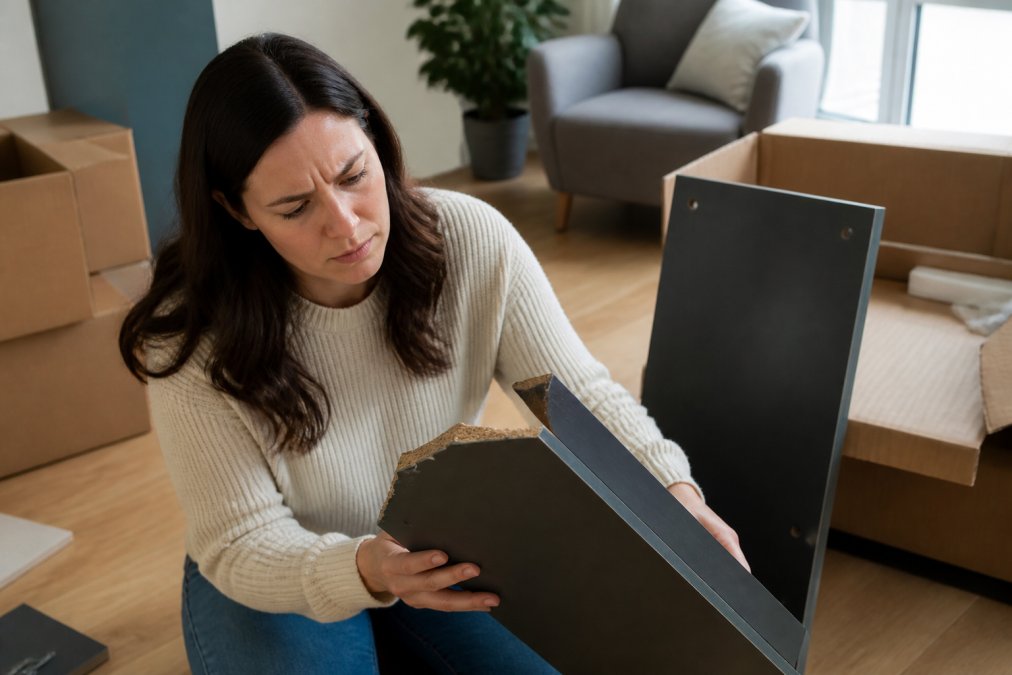
 how-to
What to Do If Furniture Arrives Damaged: 2026 Guide
Table of Contents
- Inspect the Delivery Before the Driver Leaves
- How to Document Shipping Damage With Photos and Video
- Refusing Furniture Delivery Due to Damage: When It Makes Sense
- Note the Damage on the Bill of Lading Before You Sign
- Contact Customer Service and File a Formal Damage Claim
- Furniture Damage Claim Template for Email and Phone
- Concealed Damage, Returns, and Your Consumer Protection Rights
- Frequently Asked Questions
Last Updated: September 13, 2026
Inspect the Delivery Before the Driver Leaves
The single most important thing to do when furniture arrives damaged is to inspect it before the delivery driver leaves your property. Once that truck pulls away, proving the damage happened in transit becomes significantly harder.
Here's the uncomfortable truth most guides skip: delivery teams are often incentivized to get you to sign quickly. A common mistake is signing a clean delivery receipt just to be polite while the driver waits.
Do this instead:
- Ask the driver to wait while you inspect the item
- Check the box and the furniture itself for crushed corners, punctures, or rattling
- Confirm the item matches your order number and specifications
- Refuse to sign anything until you've looked
The Federal Motor Carrier Safety Administration guidance on freight claims confirms that delivery receipt signatures carry real legal weight. Treat that clipboard like a contract, because it is one.
How to Document Shipping Damage With Photos and Video
Documenting shipping damage means capturing the item's condition from multiple angles before you move or unpack it further. Good photographic evidence is the backbone of any successful damage claim.
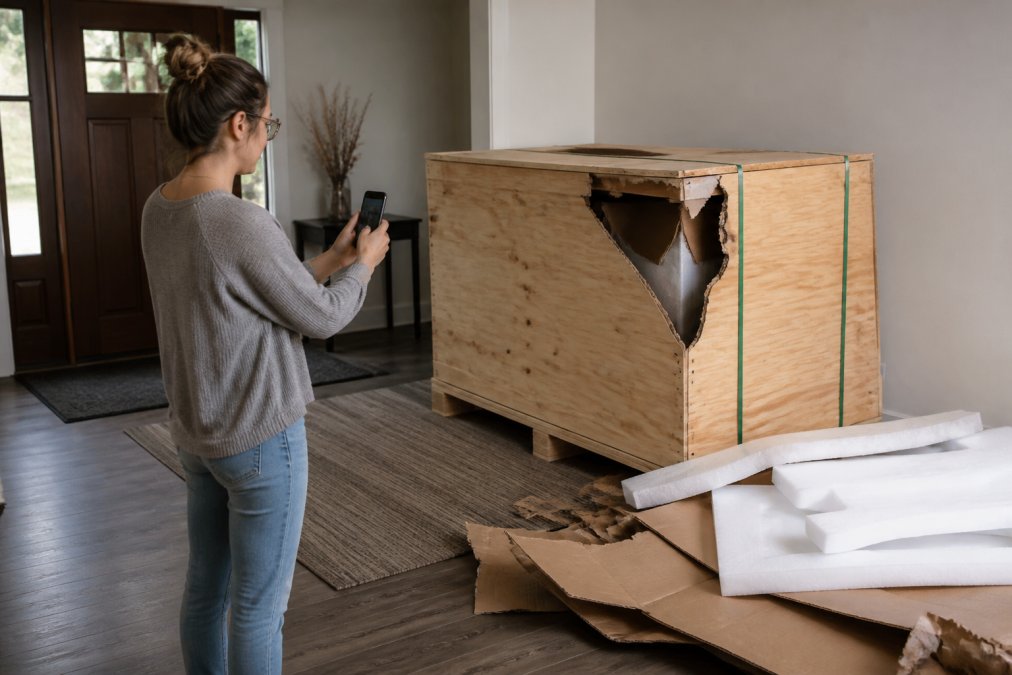
Start wide, then get close. Photograph the entire crate or box in its delivery position, then move in on each area of concern. Capture the shipping label, the order number, and any visible structural integrity issues like dents or cracks. A short video walking around the item and narrating what you see adds context that still photos can't.
Keep these principles in mind:
- Shoot in daylight or turn on overhead lights; shadows hide cosmetic defects
- Include a coin or ruler next to small scratches for scale
- Never discard packaging materials until the claim is resolved
- Save originals, not just compressed copies sent to customer service
What most guides miss is the timestamp. Most phone cameras embed it automatically, but if yours doesn't, note the date and time in writing. A concealed damage claim filed two weeks later is much weaker than one filed the same day.
Refusing Furniture Delivery Due to Damage: When It Makes Sense
Refusing furniture delivery due to damage is the right call when the item is visibly crushed, wet, or structurally compromised. Accepting a clearly destroyed piece and hoping for a replacement puts you in a weaker position than refusing it on the spot.
Refuse the delivery when:
- The crate shows water damage or mold
- You can hear broken glass or shifting internal parts
- The frame is visibly bent or cracked through
- The delivery team won't let you inspect before signing
For minor cosmetic defects, acceptance with a noted claim is usually better. You keep the item, document the flaw, and negotiate a partial refund or replacement part. Refusing a piece over a small scratch means waiting for a whole new shipment.
The decision comes down to severity. If in doubt, ask the driver to note "damage suspected, inspection incomplete" on the paperwork before you decide.
Note the Damage on the Bill of Lading Before You Sign
The Bill of Lading is the contract between the shipper, the carrier, and you as the receiver. It is the single document a freight carrier's claims department will read first, and how you annotate it determines whether the carrier or the retailer pays.
Write clearly and specifically. "Box damaged" is weak. "Top right corner of crate crushed, visible crack in wood frame beneath" is strong. Ask the driver to sign next to your note, and request a copy before they leave. If the driver refuses to sign or refuses to let you inspect, write "Driver refused inspection" on the BOL, sign it, and photograph the annotated page before the truck pulls away.
| Damage Type | What to Write on the BOL | Who Typically Pays |
|---|---|---|
| Visible crush or puncture | "Crate crushed top right, frame crack visible" | Freight carrier |
| Wet or water-stained | "Water damage to packaging, contents suspected" | Freight carrier |
| Concealed (found after signing) | "Damage discovered post-delivery, photos attached" | Retailer or carrier, case by case |
| Cosmetic only | "Minor scratch noted, accepting with claim" | Retailer, partial credit |
Why the Wording Matters
A clean signature, even one you scribble while the driver waits, is treated as a receipt of goods "in good order" under the carrier's tariff. Once that signature exists, the burden shifts to you to prove the damage happened before delivery. A noted exception on the BOL flips that burden back onto the carrier.
The OS&D Process
Freight carriers handle damage through a process called OS&D, Over, Short, and Damaged. When you note damage on the BOL, the driver is supposed to flag the shipment in the carrier's system before it leaves your address. That OS&D flag is what triggers the carrier's internal claim review. If the driver doesn't flag it, call the carrier's local terminal the same day and ask them to open an OS&D file against the PRO number on your BOL.
Concealed Damage and the Clock
Concealed damage is damage you cannot see until you unpack, a cracked internal frame, a chipped veneer under foam, a bent leg hidden by the crate. Carriers generally treat concealed damage claims as weaker than visible-damage claims because the shipment left their custody in apparently good condition. Most carriers impose a short reporting window for concealed damage, often measured in days, not weeks, so inspect and unpack promptly and report anything you find in writing the same day.
What to Keep
- The original signed BOL, not a phone photo of it
- The PRO number and any OS&D reference the carrier gives you
- The delivery appointment confirmation and driver name if you have it
- Every photo and video you took before unpacking
If the carrier denies the claim, ask for the denial in writing and the specific tariff or contract provision they relied on. That written denial is what you forward to the retailer, and to your credit card issuer if the retailer won't step in.
Contact Customer Service and File a Formal Damage Claim
Filing a damage claim starts with one phone call or email to the retailer's customer service representative, followed by written documentation. Speed matters more than perfection here.
Have these ready before you reach out:
- Order number and proof of purchase
- Photos and video of the damage
- A copy of the signed Bill of Lading with your notes
- A short written description of what you found and when
Ask for a return authorization number and a claim reference. Write down the name of the representative you speak with and the date. If the first person can't help, ask to escalate to a claims supervisor rather than starting over.
If the retailer stalls, the Consumer Financial Protection Bureau guide to disputing charges explains how a chargeback works as a last resort. Give the retailer a fair window to resolve the issue first.
Furniture Damage Claim Template for Email and Phone
A furniture damage claim template saves you from writing an emotional email that gets ignored. Keep it factual, short, and specific.
Use this email structure:
Subject: Damage Claim, Order #[number], [item name]
Hello,
My order arrived on [date] with the following damage: [specific description]. I've attached [number] photos and a video, plus a copy of the Bill of Lading noting the damage at delivery.
I'm requesting [replacement / full refund / repair]. Please provide a return authorization number and confirm next steps.
Order number: [number] Delivery date: [date] Contact: [phone and email]
Thank you, [Name]
For phone calls, lead with the order number and the phrase "I'm filing a damage claim." Ask for the claim reference number before you hang up. Follow up in writing the same day.
Concealed Damage, Returns, and Your Consumer Protection Rights
Concealed damage is damage you discover after signing the delivery receipt, and it is the hardest claim to win. Most guides stop at "contact the retailer." The stronger move is to know which legal hooks back you up before you call.
The Uniform Commercial Code
Every state except Louisiana has adopted some version of Article 2 of the Uniform Commercial Code, which governs sales of goods. Two sections matter most here:
- UCC 2-602 gives you the right to reject goods that fail in any respect to conform to the contract, including goods that arrive damaged, as long as you do it within a reasonable time after delivery and notify the seller.
- UCC 2-607 requires you to notify the seller of any breach within a reasonable time. Miss that window and you can lose your remedy even if the damage is obvious.
"Reasonable time" is not defined in the statute, but courts generally treat prompt written notice, days, not months, as safe. This is why the same-day email you send after finding concealed damage matters more than the phone call.
Magnuson-Moss Warranty Act
If the furniture came with a written warranty, the Magnuson-Moss Warranty Act gives you a federal right to see the warranty terms before purchase and to have warranty obligations honored. If the retailer refuses to honor a written warranty on a damaged item, that refusal is itself a potential violation, not just a customer service problem.
FTC Mail, Internet, or Telephone Order Merchandise Rule
If you ordered the furniture online, by phone, or by mail, the FTC's Mail, Internet, or Telephone Order Merchandise Rule requires sellers to ship within the time promised or, if no time is promised, within 30 days, and to give you a refund option if they can't. It also requires prompt refunds when goods are returned because they arrived damaged or nonconforming.
State Consumer Protection Laws
Every state has its own consumer protection statute, often called a "UDAP" (Unfair and Deceptive Acts and Practices) law, that prohibits deceptive sales practices. If a retailer misrepresents the condition of the furniture, refuses to honor a stated return policy, or charges a restocking fee on goods that arrived damaged, that conduct may fall under your state's UDAP statute. Your state attorney general's consumer protection division enforces these laws and accepts complaints online.
Small Claims Court as a Real Option
For claims under your state's small claims limit, you do not need a lawyer. Filing fees are typically modest, and the process is designed for exactly this kind of dispute: a consumer, a retailer, a documented loss. Bring your BOL, photos, email trail, and any written denial from the retailer. Many retailers settle once a court date is on the calendar.
Credit Card Chargebacks
If the retailer won't resolve the issue, the Consumer Financial Protection Bureau guide to disputing charges explains how a chargeback works under the Fair Credit Billing Act. Give the retailer a fair written window to fix the problem first, usually 10 to 14 days, then file the dispute with your card issuer. Attach the BOL, photos, and your email trail.
What to Keep
- Order confirmation and any written warranty
- The signed BOL with your damage notes
- Every photo, video, and email, with timestamps
- The name and date of every person you spoke with
- Any written denial from the retailer or carrier
The three things that decide most damage claims are speed, documentation, and a signed BOL that notes the problem. Know your UCC notice window, keep the paper trail, and escalate in writing, those three moves carry more weight than any phone call.
Frequently Asked Questions
What is the first thing I should do if my furniture arrives damaged?
Inspect the crate or carton before the delivery team leaves, and note any visible damage on the delivery receipt or bill of lading. Take photos of the packaging and the item before moving anything. Then contact the retailer's customer service representative the same day, keep the original packaging materials, and start a damage claim with your order number. Reporting within 24 to 48 hours keeps your options open for a replacement item, repair, or full refund.
Do I need to keep the original packaging for damaged furniture returns?
Yes, keep the original packaging materials, including the crate, foam, and corner protectors, until the claim is resolved. Most retailers and freight carriers require the item to be returned in its original packaging, and a return authorization often depends on it. If the packaging was destroyed during delivery, photograph it first, then ask the customer service representative whether you can use replacement packaging. Discarding the carton early is one of the most common reasons a damage claim gets denied.
Should I refuse delivery if the furniture box looks damaged?
Refuse delivery only when the damage is obvious and severe, such as a crushed crate, a cracked frame, or water damage. Refusing furniture delivery due to damage protects you from accepting a compromised item and shifts responsibility back to the freight carrier. For minor cosmetic defects on the outer box, accept the delivery but note the damage on the bill of lading and photograph everything. Once you sign a clean delivery receipt, proving transit damage becomes much harder.
How long do I have to report concealed damage to a furniture retailer?
Report concealed damage as soon as you notice it, ideally within 24 hours of delivery and no later than the window stated in your retailer's return policy, which is often 48 to 72 hours. Concealed damage means the packaging looked fine but the item inside was damaged. Photographic evidence, your signed delivery receipt, and your order number all strengthen the claim. Waiting too long can weaken your position, and some freight carriers reject claims filed after a set period.