 listicle
Best Home Sauna Brands 2026: Top Picks & Guide
Table of Contents
- Quick Comparison: Best Home Sauna Brands 2026
- Infrared vs Traditional Sauna Benefits: Which Is Right for You?
- Top Home Sauna Brands 2026: Reviews and Picks
- Home Sauna Installation Requirements: Electrical, Space, and Permits
- Sauna Health Benefits and Recovery: What the Research Shows
- How to Choose the Right Home Sauna Brand
- Frequently Asked Questions
Last Updated: September 14, 2026
Quick Comparison: Best Home Sauna Brands 2026
The best home sauna brands 2026 buyers should shortlist are Thermora, Finnmark, ThermaSol, and Blisspod, and the right pick depends on whether you want infrared, traditional steam, or a hybrid. Retreat Elite curates premium wellness pieces and backs them with expert help by phone and email plus free U.S. shipping on most orders. Shopping for a home sauna is really a decision about heat type, footprint, and electrical supply, not just brand name.
| Model | Type | Capacity | Price | Best For |
|---|---|---|---|---|
| Thermora Valen | Far infrared | 2 person | $2,999.97 | Panoramic views |
| Thermora Orien | Far infrared | 2 person | $2,899.97 | Small spaces |
| Finnmark FD-4 Trinity | Hybrid | 2 person | $8,299.97 | Infrared plus steam |
| ThermaSol Fortis | Traditional steam | 4 person | $52,399.97 | Outdoor cabin |
| Blisspod Venetian RED | Full spectrum | 2 person | $4,999.00 | Red light therapy |
That table is the fast answer. The rest of this guide explains why each model earns its place, what installation actually involves, and which health claims hold up.

Infrared vs Traditional Sauna Benefits: Which Is Right for You?
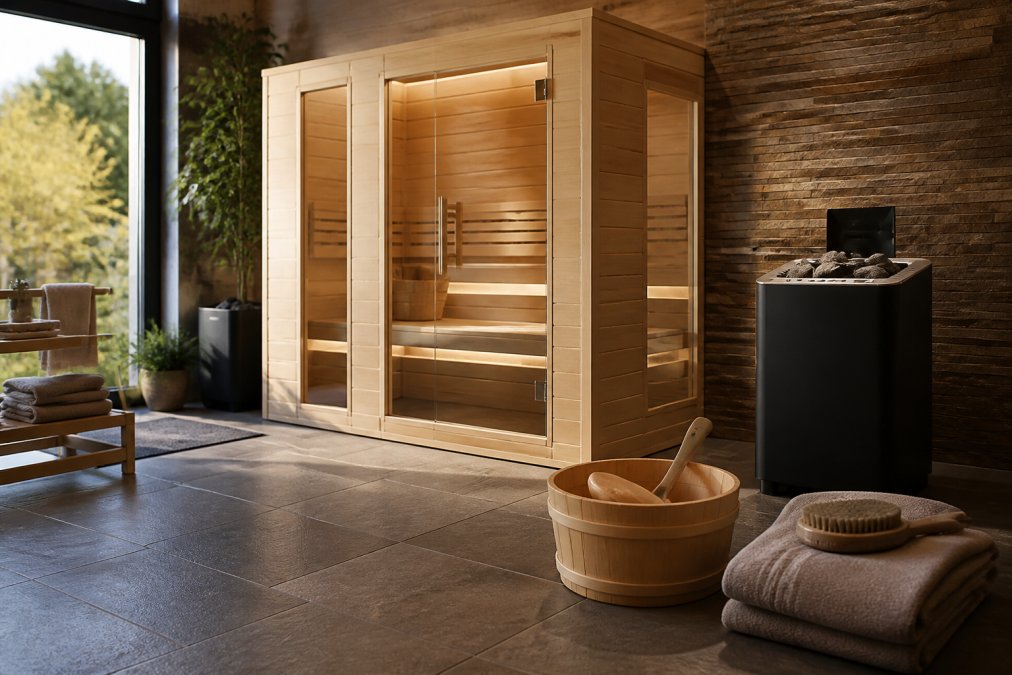
Infrared saunas warm your body directly with radiant heat, while traditional saunas heat the air and use steam from a heater. That single difference shapes everything else: warm-up time, ambient temperature, humidity levels, and how the session feels.
Here is the part most buying guides skip: the two heat types also differ sharply in how much electricity they draw and what that costs you month to month. That number, not the sticker price, is what you live with for the next decade.
How each type actually heats you
Far-infrared and near-infrared wavelengths penetrate at different depths, which is why full-spectrum units try to cover the whole infrared spectrum. Traditional steam, by contrast, relies on an electric sauna heater or wood-burning heater and a ladle of water on hot rocks.
- Infrared cabins typically run at an ambient air temperature of roughly 120°F to 150°F and warm up in about 10 to 15 minutes. Heat reaches you by radiation, so the air around you stays cooler than the air in a steam room.
- Traditional steam cabins run at roughly 160°F to 195°F at the bench, with humidity you control by ladling water onto the rocks. Warm-up runs 20 to 30 minutes for a typical residential heater.
- Hybrid cabins combine a lower-temperature infrared array with a small traditional heater so you can choose a dry radiant session or a humid steam session in the same footprint.
The energy-cost angle nobody calculates
Purchase price is a one-time hit. Electricity is the recurring bill, and it varies enormously by heat type and usage.
A useful way to estimate it: multiply the heater's wattage by the hours you run it, divide by 1,000 to get kilowatt-hours, then multiply by your local electricity rate. A 2,000W infrared cabin run for 40 minutes a day is roughly 1.3 kWh per session. A traditional 6kW to 8kW heater run for the same 40 minutes is roughly 4 to 5.3 kWh per session, three to four times the draw, because it is heating the air and the rocks, not just your body.
At a typical residential rate, that difference is the single largest long-term cost variable between the two categories. If you plan to bathe daily, the infrared unit's lower wattage compounds into meaningful annual savings; if you bathe a few times a week, the gap narrows and the traditional experience may be worth the premium.
Which one fits your routine
Neither is objectively better. It comes down to heat tolerance and the ritual you want.
- Choose infrared if you want fast warm-up, lower ambient heat, a standard 120V plug on many two-person models, and lower ongoing electricity use.
- Choose traditional steam if you want the intense, humid sweat session many bathers grew up with, can accommodate a dedicated 220V circuit, and do not mind a longer warm-up.
- Choose hybrid if you want both experiences and are willing to pay more up front and learn a more complex control system.
Residential electricity rate data by state
Top Home Sauna Brands 2026: Reviews and Picks
These five picks cover the range from compact indoor infrared cabins to fully assembled outdoor retreats. Each entry lists what it does well and where it falls short.
Thermora Valen: Best for Panoramic Views
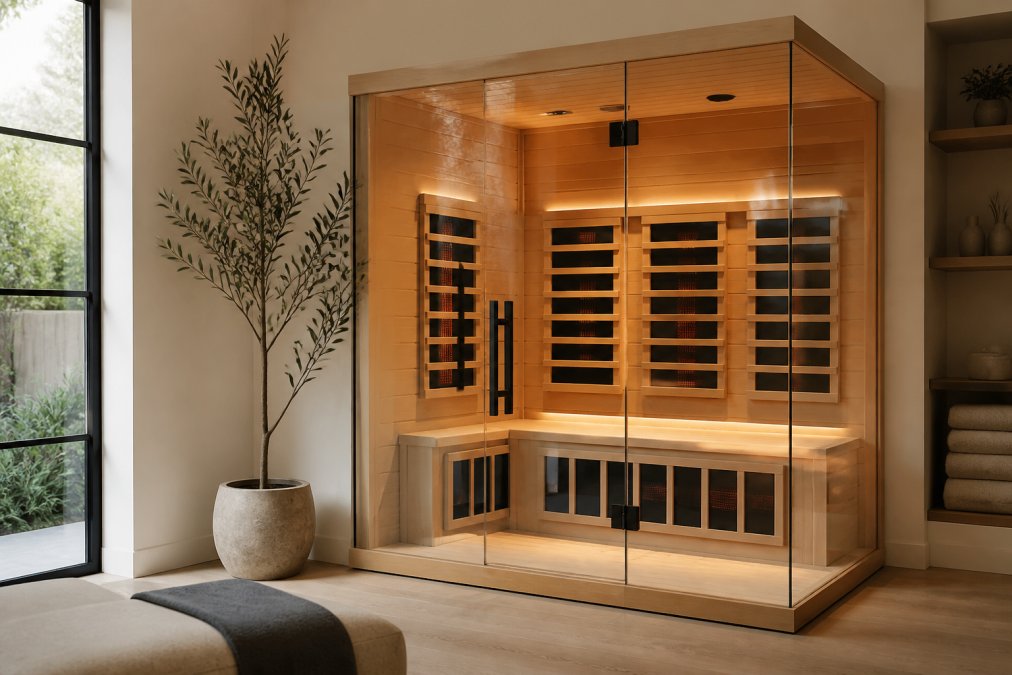
The Valen pairs 2000W low-EMF far-infrared heat with 8mm tempered glass across the front, so the cabin reads as part of the room rather than a box in the corner. Canadian hemlock construction and a 10-minute preheat keep it practical for daily use. The tradeoff is capacity: two people only, and the glass front means less wall space for shelving.
Thermora Orien: Best for Small Spaces
Ceramic heaters bring the Orien to temperature in roughly 3 to 5 minutes, and it runs on a standard 120V/15A plug, which removes the electrician from the equation for many buyers. Seating holds up to 661 lbs across two people. Where it falls short: the compact footprint means you give up the stretched-out lounging position a larger cabin allows.
Finnmark FD-4 Trinity: Best Hybrid Sauna
This is the pick for buyers who refuse to choose. The FD-4 combines Spectrum Plus infrared heaters, a 1.9kW traditional steam heater, and a 192-diode red light therapy panel in one cabin. Antimicrobial Western Canadian cedar lines the interior. The honest limitation is price and complexity: hybrid systems cost more and give you more components to learn.
ThermaSol Fortis: Best Outdoor Cabin
A fully assembled four-person outdoor retreat built around a Harvia Virta 8kW heater and Xenio digital control, with multilayer wood fiber insulation for year-round use. It arrives pre-wired and made to order. The catch is lead time and site prep: an outdoor cabin needs a level pad and a dedicated circuit before it lands.
Blisspod Venetian RED: Best Full-Spectrum Sauna
Blisspod's Venetian RED covers near, mid, and far infrared with 10 heaters, adds a large red light therapy panel and chromotherapy LED strips, and includes Wi-Fi control. Canadian hemlock and an 8mm tempered glass front keep it visually light. The drawback is that full-spectrum and red light features are only worth paying for if you will actually use them.
Home Sauna Installation Requirements: Electrical, Space, and Permits
Most indoor infrared saunas need only a standard 120V outlet, while traditional and larger hybrid units typically require a dedicated 220V circuit installed by a licensed electrician. That distinction drives both cost and timeline, so confirm it before you order.
Plan around three constraints:
- Electrical: Plug-and-play 120V models are the simplest. Hardwired 220V units need a dedicated breaker and a permit in many jurisdictions.
- Space: Measure the footprint plus clearance for the door swing and ventilation. A barrel sauna and a cabin sauna have very different site needs.
- Permits and zoning: Outdoor structures frequently trigger setback rules and permit requirements. Check with your local building department before delivery.
A common mistake is ordering an outdoor cabin before confirming setbacks. The unit arrives, and it cannot legally sit where you planned.
Sauna Health Benefits and Recovery: What the Research Shows
Regular sauna use is associated with cardiovascular support, muscle recovery, and relaxation, and many bathers report better sleep and lower stress. The mechanism is straightforward: heat raises circulation and heart rate in a controlled way, similar to mild exercise.
But most buying guides stop there. What they rarely give you is the other half of the picture, who should not use a sauna, how long a session should actually run, and how infrared and traditional sessions differ in what they deliver. That is the part that protects you and sets realistic expectations.
What the evidence supports
- Cardiovascular conditioning. Repeated heat exposure raises heart rate and increases blood flow, which is why frequent sauna use is often discussed alongside cardiovascular fitness. The effect is real but modest; it complements exercise, it does not replace it.
- Muscle recovery. Heat loosens tight tissue and increases circulation to working muscles, which is why sauna sessions are common after training. Infrared and steam both help here.
- Relaxation and sleep. The post-session cooldown appears to help many people wind down. A common pattern is a session in the early evening followed by a cool shower.
- Skin and collagen. Red light therapy panels, found on some full-spectrum and hybrid cabins, are marketed for skin and collagen support. Treat these claims as promising but not equivalent to the cardiovascular evidence.
Session parameters that matter
A typical session runs 15 to 20 minutes for infrared and 10 to 15 minutes for traditional steam, followed by a cool-down. Beginners should start shorter, 8 to 10 minutes, and build up. More is not better; the benefit comes from regular, moderate exposure, not from pushing duration.
Hydrate before and after every session. Alcohol and sauna do not mix, because both dilate blood vessels and can drop blood pressure.
Who should avoid or check with a doctor first
This is the section competitors leave out, and it is the one that matters most.
- Pregnancy. Heat exposure raises core body temperature, which is a known concern during pregnancy (mayoclinic.org). Consult an obstetrician before any sauna use.
- Cardiovascular conditions. If you have heart disease, uncontrolled high blood pressure, or a recent cardiac event, get medical clearance first. Heat stresses the cardiovascular system.
- Low blood pressure or fainting history. Heat dilates blood vessels and can cause light-headedness or fainting, especially on standing.
- Medications that affect sweating or blood pressure. Diuretics, beta blockers, and some antidepressants can change how your body handles heat. Ask a pharmacist or physician.
- Alcohol or recreational drug use before a session. Both impair your body's ability to regulate temperature.
- Children and older adults. Both groups regulate temperature less efficiently and should use shorter, cooler sessions with supervision.
Infrared vs traditional: does the health outcome differ?
The honest answer is that the strongest evidence base is for heat exposure in general, not for one wavelength over another. Traditional steam delivers a higher ambient temperature and humidity, which some bathers find more intense. Infrared delivers a lower ambient temperature that is easier to tolerate for longer, which can make daily consistency easier. Consistency, not wavelength, is what most practitioners point to as the driver of results.
Sauna safety and health guidance
How to Choose the Right Home Sauna Brand
Start with heat type, then work backward to capacity, electrical supply, and budget. A buyer who wants quick daily sessions in a small room lands on a 120V infrared cabin. A buyer hosting four people in the backyard needs an outdoor steam cabin and a site plan.
Use this checklist:
- Confirm infrared, traditional, or hybrid based on your heat tolerance
- Measure the footprint and door clearance
- Verify your electrical panel can support the unit
- Check local permit and zoning rules for outdoor placement
- Decide whether red light therapy or chromotherapy is worth the premium
- Confirm warranty terms and delivery timeline before ordering
Retreat Elite simplifies this step by listing dimensions and specifications clearly and offering expert help by phone and email, so you can match a model to your space before you commit.
Frequently Asked Questions
What is the difference between infrared and traditional saunas?
Infrared saunas use carbon or ceramic heaters to warm your body directly with radiant heat, operating at lower ambient temperatures (113-149°F). Traditional saunas heat the air to 160-190°F using a steam heater or wood-burning stove. Infrared models like the Thermora Valen heat up in about 10 minutes and plug into a standard outlet, while traditional saunas require more time to warm and often need hardwired electrical connections. Both offer distinct wellness routines depending on your heat tolerance and recovery goals.
Do I need a permit to install a sauna at home?
Permit requirements vary by municipality and installation type. Plug-and-play infrared saunas that use a standard 120V outlet typically don't require permits. Hardwired installations, outdoor cabins, or any structural modifications usually need electrical and building permits. Check with your local building department before purchasing. Outdoor models like the ThermaSol Fortis may also be subject to zoning regulations regarding setbacks and accessory structures. Always verify with your local code office first.
How much space is required for a residential sauna installation?
Space needs depend on bather capacity. A 1-person infrared sauna like the Finnmark FD-1 fits in roughly 3 by 3 feet. Two-person models such as the Thermora Orien need about 4 by 3.5 feet. Four-person outdoor cabins like the ThermaSol Fortis require significantly more room, often 6 by 8 feet plus clearance. Always account for door swing, ventilation, and access to electrical panels. Measure your intended footprint and compare it to product dimensions before ordering.
Are home saunas worth the investment in 2026?
For homeowners prioritizing recovery and wellness, home saunas deliver long-term value. A quality infrared unit like the Thermora Ivara costs $2,999.97 and provides unlimited sessions versus $50-$80 per spa visit. Beyond convenience, regular sauna use supports muscle recovery, cardiovascular health, and stress reduction. Energy costs for infrared models are comparable to running a small space heater. The key is choosing the right size, heater type, and brand for your space and wellness routine.
Choosing a home sauna is a long-term decision, and the wrong fit shows up fast once the unit is installed. At Retreat Elite, we curate premium wellness pieces and back them with clear specifications and guidance, free U.S. shipping on most orders, and expert support by phone and email. Browse the Retreat Elite sauna collection and find the model that fits your space, your routine, and how you want to live at home.