 comparison
Home Theater vs Living Room: Which Setup Works Best
Table of Contents
- Home Theater vs Living Room: Key Differences at a Glance
- Dedicated Home Theater Rooms: Immersion and Control
- Living Room Home Theater Setup: Flexibility and Everyday Use
- Home Theater Seating Layout and Comfort Considerations
- Audio Quality, Sound Isolation, and Room Acoustics
- Living Room Projector Setup vs Television Display
- Home Theater Lighting Ideas and Screen Visibility Control
- Cost, Installation, and Total Investment
- Frequently Asked Questions
Last Updated: October 20, 2026
Home Theater vs Living Room: Key Differences at a Glance
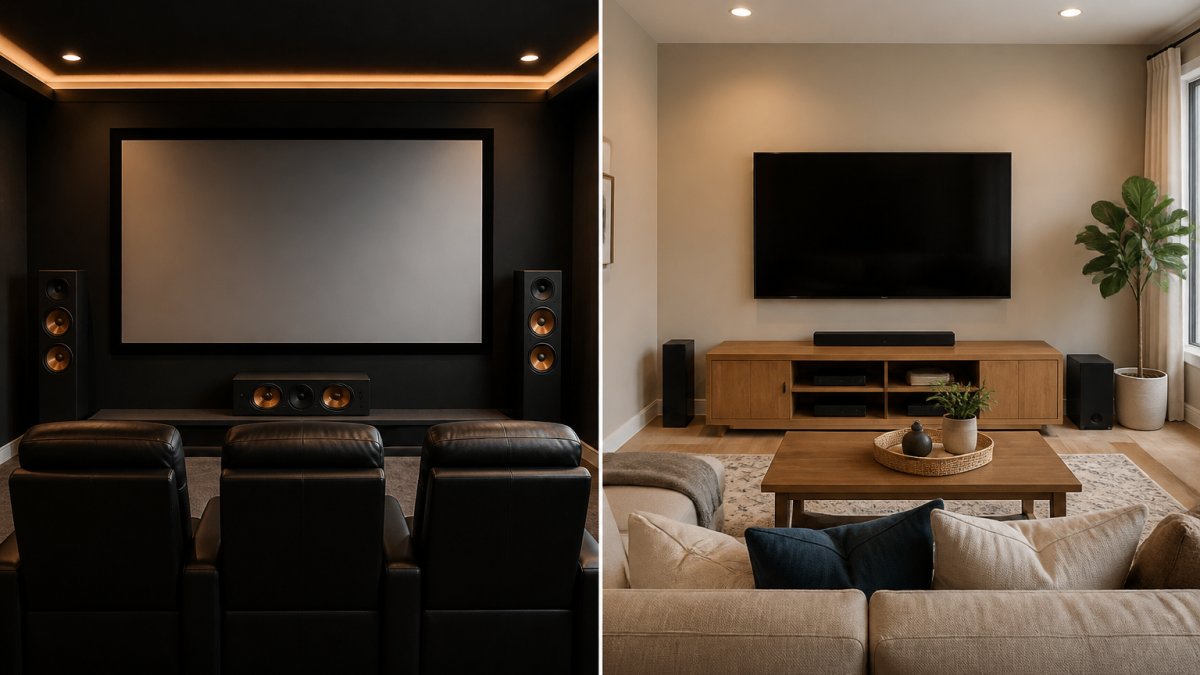
The choice between a dedicated home theater and a living room home theater setup shapes how you use your space daily. A dedicated media room delivers cinema-level immersion with controlled lighting, acoustic treatment, and theater-focused seating. A living room setup trades some control for flexibility, so the space still works for everyday living, hosting guests, and activities beyond movies.
Dedicated home theaters maximize viewing and listening through isolation and optimization. Living room home theater setups maximize functionality by blending entertainment with everyday use. Neither is universally "better"; the right choice depends on your household's priorities, space, and budget.
At Retreat Elite, we help homeowners make this decision daily, and both approaches work when they match the household's lifestyle. Below, we walk through the tradeoffs so you can decide which setup serves your home best.
| Aspect | Dedicated Home Theater | Living Room Setup |
|---|---|---|
| Immersion & Control | Maximum (optimized lighting, acoustics, isolation) | Good (compromises for everyday use) |
| Everyday Flexibility | Limited (single-purpose room) | High (multipurpose space) |
| Seating Comfort | Theater-grade recliners & sectionals | Comfortable but not cinema-focused |
| Audio Quality | Full surround sound, acoustic treatment | Decent sound, limited isolation |
| Lighting Control | Complete darkness capability | Natural light management only |
| Installation Complexity | High (construction, wiring, tuning) | Moderate (furniture-based setup) |
| Typical Investment | $8,000-$25,000+ | $2,000-$8,000 |
| Best For | Movie enthusiasts, frequent entertaining | Families wanting flexibility |
Dedicated Home Theater Rooms: Immersion and Control
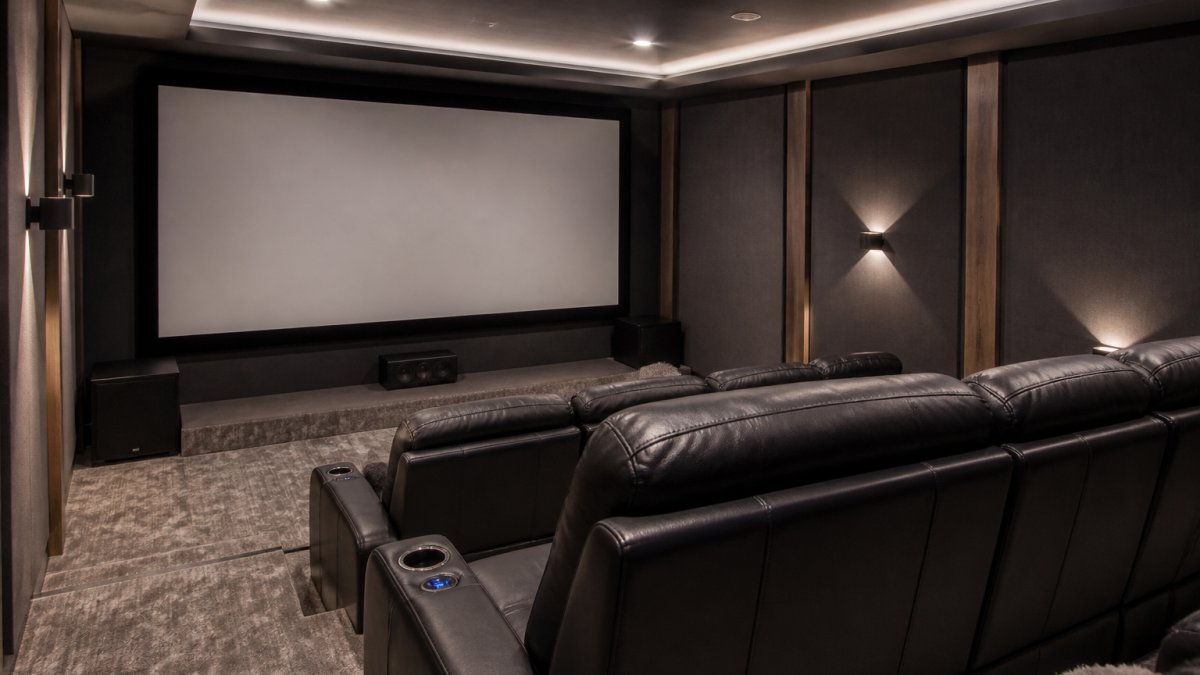
A dedicated home theater room is a single-purpose space designed from the ground up for cinematic experience. The walls are treated for acoustics. The lighting can be dimmed to complete darkness. The seating is arranged for optimal viewing angles. Every design choice serves one goal: recreate a movie theater in your home.
The immersion advantage is real. In a dedicated room you control every variable: kitchen or hallway noise doesn't interrupt the movie, afternoon sunlight doesn't wash out the screen, and the surround sound system can be tuned to the room's dimensions and materials. That control is impossible in a multipurpose space.

However, dedicated rooms require commitment: construction, acoustic panels, concealed wiring, and equipment placement that serves only entertainment. If the space is used infrequently, that investment sits idle, and if priorities shift toward a guest bedroom or home office, a dedicated theater becomes an expensive constraint.
A typical dedicated home theater involves framing, electrical work, HVAC adjustments, and acoustic treatment. These are renovations, not furniture purchases, so budget accordingly and plan for professional installation to tune the room properly.
Living Room Home Theater Setup: Flexibility and Everyday Use
A living room home theater setup transforms your existing living space into an entertainment hub without sacrificing its everyday function. Your family still gathers there for conversation, reading, gaming, and hosting. The room works for movie nights and normal life equally well.
Flexibility is the living room approach's core strength. A quality sectional or reclining sofa serves double duty for movies and everyday lounging, a television or projector can be mounted and hidden when not in use, and the room's lighting still accommodates natural daylight and normal activities.

The tradeoff is control. You can't eliminate outside noise as effectively, sunlight management requires quality window treatments rather than blackout construction, and audio depends on the room's existing acoustics. Seating may recline and include cup holders but isn't optimized for theater-style viewing angles.
Living room setups work best for households that value flexibility over maximum immersion, delivering a genuine entertainment experience without sacrificing the room's everyday purpose. For families with varying interests or homes where space is at a premium, this approach often makes more practical sense.
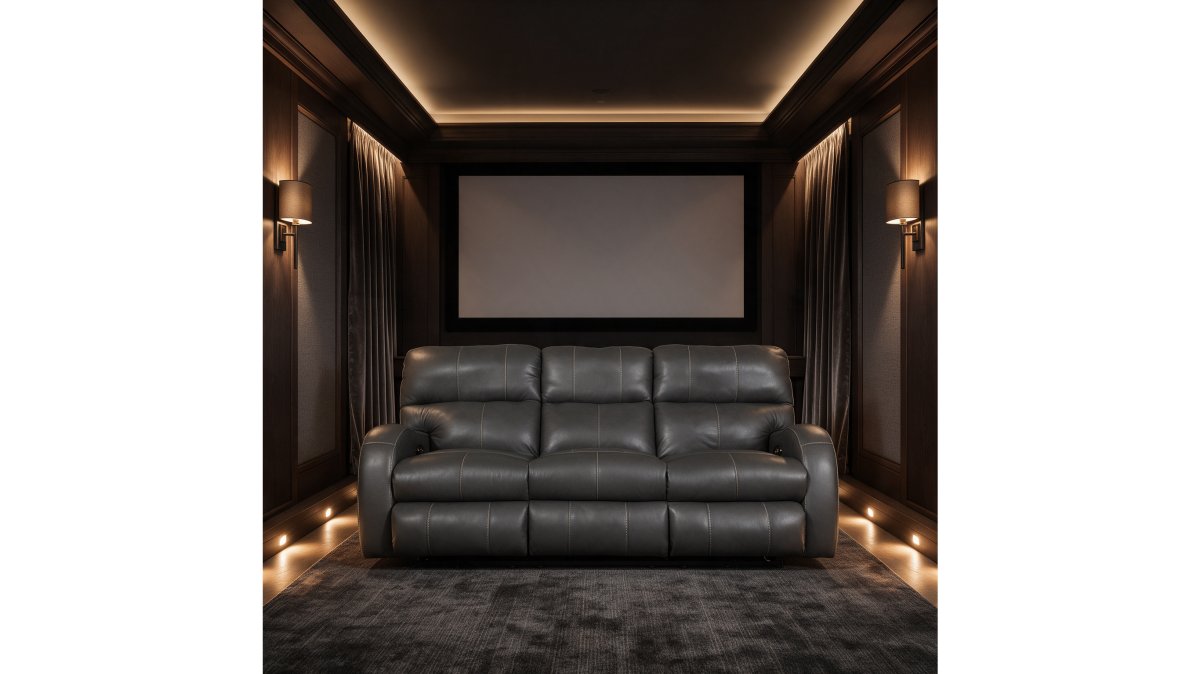
Home Theater Seating Layout and Comfort Considerations
Seating is where the home theater vs living room decision becomes tangible. Theater-grade seating prioritizes viewing angles, recline mechanics, and comfort for extended viewing. Living room seating balances entertainment comfort with everyday usability.
In a dedicated home theater, seating is arranged in tiered or stadium-style rows, with the first row 8-10 feet from the screen and subsequent rows progressively farther back and higher. This ensures every viewer sees the screen unobstructed at an optimal angle.
Living room seating serves multiple purposes, comfortable for a two-hour movie and equally comfortable for casual lounging while reading or working.
For frequent entertainers, sectional configuration matters. Modular pieces like the MaxView Media Mocha 6-Piece Power Reclining Sectional with Immersive Sound System let you rearrange seating based on who's visiting, and the integrated audio delivers sound directly to the seating area without separate speakers.

The key consideration: how many hours per week does your household spend in this room? If it's 20+ hours weekly and mostly for entertainment, dedicated theater seating makes sense. If it's 40+ hours weekly but only half is entertainment-focused, living room seating that adapts to multiple uses is smarter.
Audio Quality, Sound Isolation, and Room Acoustics
Audio quality is where dedicated home theaters pull decisively ahead.
Living room audio faces real constraints: hard tile or wood floors create reflections, open doorways let sound escape, and windows rattle when bass hits. Rugs, curtains, and strategic furniture placement help, but you can't achieve the acoustic control of a dedicated room.
Still, living room setups can deliver satisfying audio. Quality sectionals with integrated sound systems, like the MaxView Media Mocha with its Immersive Sound System, deliver audio directly to your seating area, with Bluetooth connectivity and convenient media controls, no separate speaker installation or tuning required.
For ambient noise control, dedicated theaters have another advantage: isolation. Solid walls, sealed doors, and acoustic treatment keep outside noise out and entertainment noise contained.
If audio quality is your priority and budget allows, a dedicated room with professional acoustic treatment is worth it. If good-enough audio in exchange for a multipurpose space works for you, living room audio systems have improved significantly and deliver genuine entertainment value.
MaxView Media Mocha 6-Piece Power Reclining Sectional with Immersive Sound →
Living Room Projector Setup vs Television Display
The screen technology you choose shapes both the immersion level and the room's flexibility. Dedicated home theaters typically use projectors because they create larger images and can be concealed when not in use. Living rooms often use televisions because they integrate more seamlessly into everyday spaces.
Projectors deliver a cinema-scale experience: a 100-120 inch image is hard to achieve with a television without dominating the room.
Televisions are more practical for living rooms. They work with ambient light, need no complete darkness, warm-up time, or calibration, and integrate into your room's design as a furniture piece or wall-mounted display.
The 134" Farmhouse TV Unit from Retreat Elite, designed to accommodate 75+ inch televisions, shows how living room displays integrate into everyday spaces. The unit includes ample storage for media, remotes, and gaming accessories. It's a piece of furniture that serves your entertainment needs while fitting naturally into your home's design.
For dedicated theaters, projectors make sense because the room is already optimized for darkness and screen size. For living rooms, televisions are typically better because they're more flexible and don't require the lighting and acoustic environment to be engineered for projection.
Home Theater Lighting Ideas and Screen Visibility Control
Lighting control separates dedicated home theaters from living room setups more clearly than almost any other factor. A dedicated theater can achieve complete darkness, which maximizes screen contrast and color accuracy.
In a dedicated home theater, lighting typically includes blackout construction: heavy curtains or motorized shades that block all exterior light, plus dimmable interior lighting that can be reduced to zero. This lets the screen display its full dynamic range without ambient light washing out blacks or reducing contrast.
Living rooms use quality window treatments and strategic lighting to manage daylight while keeping the space functional. Blackout curtains can darken the room during movie time without being permanent installations, and LED accent or recessed lights can be dimmed during entertainment but remain usable during normal activities.
The practical reality: living room screen visibility is good but not optimal. Afternoon movies might require closing curtains, and evening viewing works better than morning. That's the flexibility tradeoff: you gain a multipurpose room and lose cinema-perfect lighting control.
If your household watches movies primarily in evening hours and you're willing to manage window treatments during daytime viewing, living room lighting is sufficient.
Cost, Installation, and Total Investment
The financial picture clarifies the home theater vs living room decision quickly. Dedicated home theaters require significant upfront investment in construction, acoustic treatment, electrical work, and theater-grade equipment.
A modest dedicated home theater typically costs $8,000-$15,000 with basic acoustic treatment, wiring, a quality projector, screen, and seating. A premium theater with professional acoustic design, motorized features, and high-end equipment can exceed $25,000.
Living room home theater setups start lower. A quality sectional like the Caberryne Leather Recliner Sofa Set at $1,987.99 delivers comfortable seating for entertainment and everyday use.
For households wanting premium living room comfort without the dedicated theater investment, the MaxView Media Mocha 6-Piece Power Reclining Sectional with Immersive Sound System at $3,299.00 combines theater-grade seating with integrated audio and modular flexibility.
The cost difference reflects purpose. Dedicated theaters are investments in a single-use space optimized for maximum immersion. Living room setups are investments in multipurpose comfort that serves entertainment alongside everyday life.
The home theater vs living room decision ultimately comes down to how your household actually lives. If you have dedicated space, watch movies frequently, and want maximum immersion, a dedicated theater room justifies the investment.
At Retreat Elite, we help homeowners choose the right pieces for whichever approach matches their lifestyle. Whether you're outfitting a dedicated theater with premium seating or upgrading your living room with quality recliners and integrated audio systems, we provide expert guidance on specifications, dimensions, and setup to help you create a space that works for how you actually live.
Frequently Asked Questions
What is the main difference between a home theater and a living room entertainment setup?
A dedicated home theater is a separate room designed exclusively for viewing and listening, with controlled lighting, acoustic treatment, and optimized seating. A living room setup serves multiple purposes, dining, socializing, everyday living, while incorporating entertainment equipment. Home theaters prioritize immersion and sound isolation; living rooms prioritize flexibility and everyday comfort. Both can deliver quality cinema experiences, but they make different trade-offs between performance and functionality.
Is a dedicated home theater better than a living room home theater setup?
Neither is universally better, it depends on your priorities. Dedicated home theaters offer superior sound isolation, complete light control, optimized room acoustics, and a cinema-style environment. Living room setups provide flexibility for multiple activities, easier social hosting, and lower installation costs. If you prioritize immersive viewing and have a spare room, a dedicated theater wins. If you want entertainment without sacrificing everyday living space and want to minimize renovation costs, a living room setup is more practical.
How much space do you need for a home theater seating layout?
For comfortable home theater seating, plan for at least 12 to 15 feet of viewing distance from the screen. Seating rows should be 3 to 4 feet apart to allow reclining without interference. A typical layout seats 4 to 6 people and requires a room at least 16 feet wide and 20 feet deep. Living room setups are more flexible, a 14-by-18-foot space can accommodate quality seating and a 55 to 75-inch display. Smaller rooms work with sectionals like the Black Sofa Set at 80 inches wide, which fits standard living room dimensions.
What equipment do you need for a living room home theater setup?
Essential equipment includes a quality television (55 inches or larger), a surround sound system with speakers and a subwoofer, comfortable seating, and cable management. Optional additions include a media console for storage, dimmable lighting, and acoustic panels to reduce echoes. The MaxView Media Mocha Sectional includes an integrated Immersive Sound System, combining audio directly into seating, ideal for living rooms where dedicated speaker placement is limited. Start with quality seating and a good TV, then add audio components as your budget allows.
Can a living room work as a home theater without major renovations?
Yes. A living room can deliver a cinema-like experience without structural changes by focusing on seating, sound, and light control. Invest in power reclining seating with good support, add a quality TV or projector, install blackout curtains or shades for light control, and position speakers strategically around the room. Avoid hard surfaces that cause echoes, add soft furnishings like area rugs and curtains to improve acoustics. This approach costs less than building a dedicated room and keeps your space functional for everyday use while delivering solid entertainment performance.