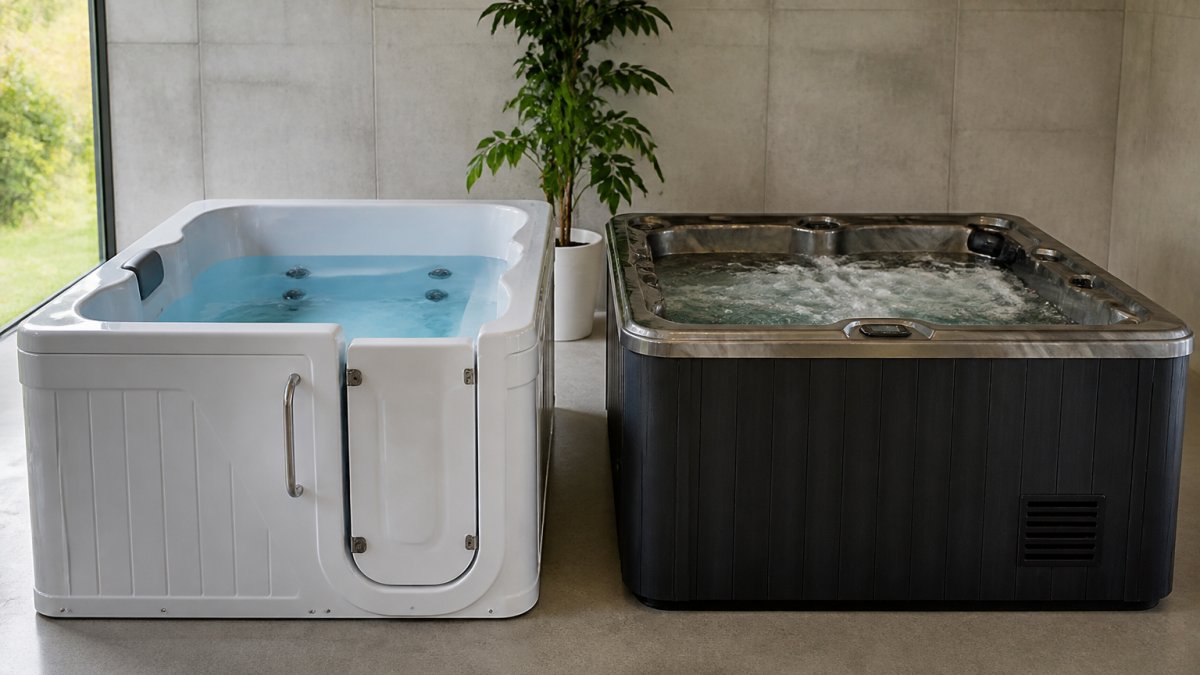
 comparison
Indoor Hydrotherapy Tub vs Hot Tub: Which Fits Your Home
Last Updated: November 1, 2026
Quick Summary
The hydrotherapy tub vs hot tub choice comes down to water: a hydrotherapy tub is a bathtub with built-in massage jets that fills from your home's water supply and drains after each use, while a hot tub holds heated water continuously with its own filtration and sanitation system. That difference drives installation, maintenance, humidity control, and daily use.
- A jetted bathtub is any tub with water jets; a hydrotherapy tub is a jetted tub built around therapeutic massage.
- Indoor hot tub installation requires a structural check, drainage, humidity control, and often a 240V circuit.
- Hot tubs need weekly water testing, sanitizer adjustments, and filter cleaning; hydrotherapy tubs skip the chemistry schedule.
- A hot tub used daily justifies its maintenance, while a tub used twice a week often favors a hydrotherapy model.
- Ask installers to separate equipment, labor, electrical, plumbing, structural work, and permit fees to compare bids.
Table of Contents
- Indoor Hydrotherapy Tub vs Hot Tub: The Core Differences
- Hydrotherapy Tub vs Jetted Tub: Where the Line Sits
- Indoor Hot Tub Installation Requirements Before You Commit
- Hot Tub Maintenance vs Bathtub Maintenance: Time and Cost
- How Long to Soak: Hot Tub Soak Duration and Daily Use
- Total Cost of Ownership: Purchase, Installation, and Operating Costs
- Which Option Fits Your Household and Use Case
- Choosing Your Hydrotherapy Setup at Retreat Elite
- Frequently Asked Questions
Indoor Hydrotherapy Tub vs Hot Tub: The Core Differences
The indoor hydrotherapy tub vs hot tub decision comes down to one question: do you want a bathroom fixture you fill and drain, or a standing body of heated water you maintain year-round?
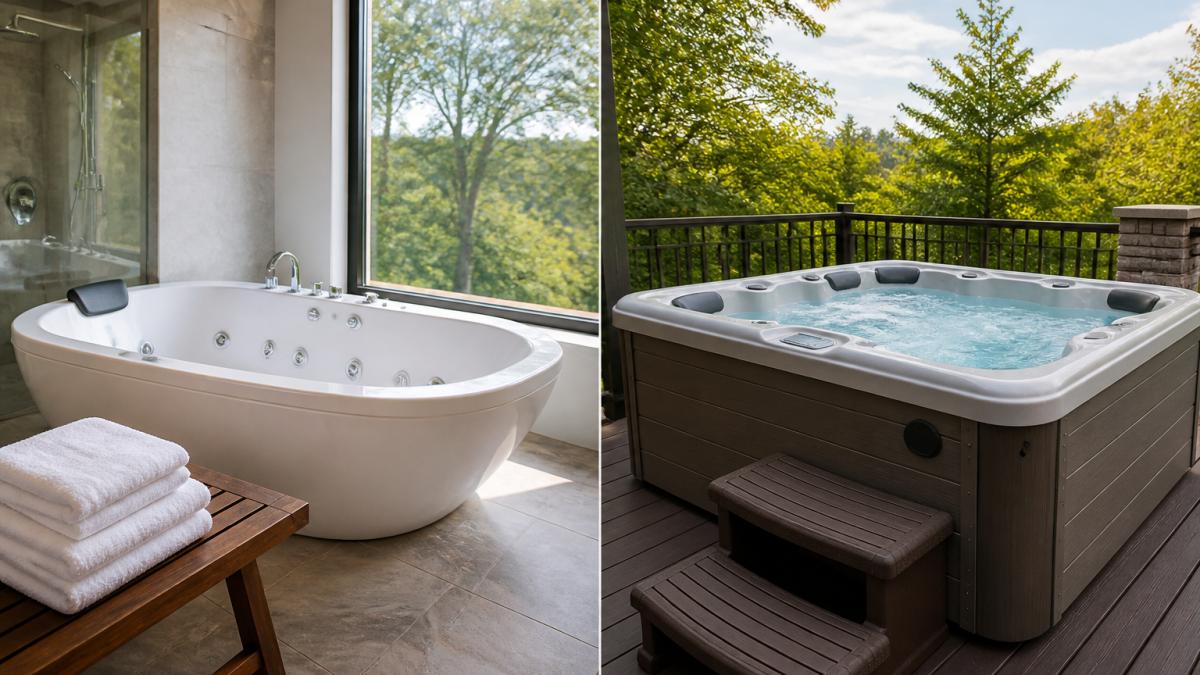
**A hydrotherapy tub is a bathtub with built-in massage jets that fills from your home's water supply and drains after each use.
That single difference drives everything else: installation, maintenance, humidity control, and how you actually use the thing on a Tuesday night.
What Sets a Hydrotherapy Tub Apart From a Hot Tub
A hydrotherapy tub lives indoors and connects to your household plumbing. You fill it, soak, and drain it. Water volume stays modest, and you never inherit a standing body of water to balance and sanitize.
A hot tub holds its water for weeks or months. That means a heating system running continuously, a filtration circuit, and chemical testing on a schedule.
Hydrotherapy Tub vs Jetted Tub: Where the Line Sits
Here is where most buyers get confused, and it costs them. A jetted bathtub is any tub with water jets. A hydrotherapy tub is a jetted tub built around therapeutic massage: adjustable jets, targeted placement, often air and water combined.
The terms overlap, but the intent differs. A basic jetted tub moves water for sensation. A hydrotherapy model aims at muscle relaxation and circulation, with jets you can direct at the neck, shoulders, and lower back.
Indoor Hot Tub Installation Requirements Before You Commit
Indoor hot tub installation requirements are stricter than most homeowners expect, and they are the most common reason an indoor spa project stalls after the tub is ordered. The floor must carry the loaded weight, the room needs drainage and humidity control, the doorway must admit the unit, and the electrical supply has to match the spa's rating. Work through these checks before you buy anything.
Floor Load, Drainage, and Ventilation Checks
- Floor load: A filled spa concentrates weight in a small footprint. A filled spa carries a substantial concentrated load, so confirm your floor can support it before ordering. A structural engineer should confirm your floor can take that load, especially on upper levels, over crawl spaces, or on decks.
- Doorway and path access: Measure the narrowest doorway, stair turn, and hallway the spa must pass through, then compare against the unit's widest dimension with packaging removed. A spa that fits the room but not the route is a costly return. Confirm delivery access before the order ships.
- Drainage: Plan for spillover and drain-down. A floor drain or nearby drain point saves you a wet-room headache, and the drain must handle the volume and rate of a full drain-down without backing up. Confirm the drain location relative to the spa's drain valve.
- Ventilation and humidity control: Heated water releases moisture continuously. Without humidity control, you risk condensation, mold, and damaged finishes. A common approach is a properly sized exhaust fan or dehumidifier rated for the room volume, plus a vapor barrier and moisture-resistant finishes. Run the ventilation during and after use, not only while the cover is off.
If you want to see what a 240V model demands, review the 6-person 240V luxury spa with 46 jets and glacier filtration and note its power and footprint specs before you measure your room. Compare those specs against your doorway width and floor rating, not just the room dimensions.

Indoor Versus Outdoor Placement Trade-Offs
Indoor placement buys you privacy, weather protection, and year-round access without stepping outside. It also concentrates moisture and heat in a room that was likely not designed for either. Outdoor placement avoids the humidity problem but exposes the spa to cold, which raises standby heat loss and makes insulation and a well-fitted cover more important. The practical split: indoor suits bathrooms and dedicated wellness rooms with ventilation and drainage; outdoor suits patios and decks with a structurally rated base.
Hot Tub Maintenance vs Bathtub Maintenance: Time and Cost
Hot tub maintenance vs bathtub maintenance is the trade-off nobody explains clearly. A bathtub needs a wipe-down and occasional jet cleaning.
Expect weekly tasks with a hot tub: testing water chemistry, adjusting sanitizer, cleaning filters, and checking the system.
The upside of a hot tub's upkeep is ready-to-use hot water at any hour. The downside is that the work never fully stops.
CSC Kansas 6-Person 240V Luxury 46-Jet Spa With Glacier Filtration →
How Long to Soak: Hot Tub Soak Duration and Daily Use
Hydrotherapy tubs follow a similar rhythm, though you control the temperature more precisely and drain afterward. A 15-to-20-minute evening soak fits neatly into a recovery routine.
Daily use changes the math. A hot tub you use every day justifies its maintenance. A tub used twice a week often makes a hydrotherapy model the smarter buy.
Total Cost of Ownership: Purchase, Installation, and Operating Costs
Total cost of ownership separates these two more than sticker price does, and it is the comparison most buyers never run. A hydrotherapy tub carries a purchase price plus standard bathroom plumbing. A hot tub adds electrical work, a reinforced base, and years of heating, chemical, and repair costs. Run the math over five to ten years, not over the first invoice.
Purchase and Installation Costs
- Hydrotherapy tub: The purchase price plus standard bathroom plumbing. If the bathroom already has a tub supply and drain in place, installation is a fixture swap. If you are adding a tub where none existed, budget for plumbing rough-in, a drain, and possibly a larger water heater.
- Hot tub: The purchase price plus a structurally rated base, a dedicated electrical circuit, and often a permit and inspection. A 240V spa may need a dedicated circuit, a disconnect, and a permit. A plug-and-play model avoids the electrician entirely but still needs a level, rated surface and a dedicated outlet.
Installation cost is where budgets break, and it varies too much by room and region to quote a single number. Get local bids for plumbing, electrical, and any structural work before you commit.
Operating Costs Over Time
- Water: A hydrotherapy tub heats only the water you use, then the water leaves. A hot tub heats and reheats a standing body of water continuously, and its heater and pumps run to hold temperature. Insulation helps, which is why models with layered blackout insulation hold heat more efficiently and reduce standby loss.
- Energy: A hot tub's energy use climbs in cold weather and with frequent cover-off time. A hydrotherapy tub's energy use tracks how often you fill it and how large the tub is. Neither number is fixed, but the pattern favors the bathtub for occasional use and the hot tub for daily use.
- Chemicals and filters: A hot tub needs ongoing sanitizer, test strips, and filter cleaning or replacement. A hydrotherapy tub skips the chemistry schedule because the water leaves when you do, though jet cleaning still applies.
- Repairs: A hot tub has more equipment to fail: heater, pumps, control pack, and filtration circuit. A hydrotherapy tub has jets, a pump, and plumbing. More equipment means more potential repair points over the life of the unit.
How to Compare Bids
Ask each installer to separate equipment, labor, electrical, plumbing, structural work, and permit fees so you can compare like for like. A lower equipment price with a higher installation quote is not a lower total. Add a five-year estimate for water, energy, chemicals, and filters to see the real gap between the two options.
Which Option Fits Your Household and Use Case
Match the tub to how you actually live. That is the whole decision.
| Your Situation | Better Fit | Why |
|---|---|---|
| Bathroom renovation, limited floor space | Hydrotherapy tub | Fills and drains, no continuous water care |
| Frequent evening recovery routine | Hydrotherapy tub | Precise temperature, quick sessions |
| Hosting and social gatherings | Hot tub | Holds heat, seats multiple people |
| Rental or upstairs room | Hydrotherapy tub | Lower structural and moisture demands |
| Year-round outdoor use | Hot tub | Built for weather and continuous heat |
| Low-maintenance preference | Hydrotherapy tub | No chemistry schedule |
| Large family or group soaks | Hot tub | Multi-person seating capacity |
Best for: households prioritizing recovery and simplicity. Skip if: you want a shared, always-hot gathering space.
Choosing Your Hydrotherapy Setup at Retreat Elite
The right choice depends on your room, your routine, and how much upkeep you will genuinely keep up with. We help homeowners work through dimensions, electrical needs, and placement before anything ships, so the piece fits the space the first time.
Browse our wellness collection to compare specifications side by side, or reach out by phone or email with your room measurements and we will point you to the right model. Free U.S. shipping applies to most orders.
Frequently Asked Questions
What is the difference between an indoor hydrotherapy tub and a hot tub?
An indoor hydrotherapy tub is a jetted bath plumbed into your bathroom, filled and drained each time, and used for 15 to 30 minute sessions. A hot tub is a continuously filled, heated vessel, usually outdoors, kept at temperature around the clock. In a hydrotherapy tub vs hot tub comparison, the practical split comes down to installation, water care, and how often you plan to soak. Indoor tubs suit solo recovery sessions; hot tubs suit social use and year-round outdoor soaking.
Is a hydrotherapy tub the same as a jetted bathtub?
Largely yes. The terms overlap, and most products sold as hydrotherapy tubs are jetted bathtubs with massage jets and a heater. The distinction that matters is plumbing: a jetted bathtub fills from your home water supply and drains after each use, while a hot tub holds the same water for weeks or months. If you are weighing a hydrotherapy tub vs jetted tub, check jet count, pump power, and whether the unit has an inline heater for longer soaks.
What are the indoor hot tub installation requirements?
Indoor hot tub installation requirements usually include a reinforced floor rated for the filled weight, a dedicated electrical circuit, adequate drainage, and ventilation or humidity control to handle evaporation. You also need enough clearance for entry and service access. Confirm floor load with a contractor before delivery, and check that your bathroom or spa room can vent moist air. Skipping ventilation is the most common cause of moisture damage in indoor installs.
How long should you stay in a hot tub?
Most guidance points to 15 to 30 minutes per session at typical soaking temperatures. Hot tub soak duration depends on water temperature, your tolerance, and whether you are using it for recovery or social time. Start with 15 minutes, step out, and see how you feel. If you plan long daily soaks, a tub with a heater that maintains temperature matters more than jet count.
Is a hydrotherapy tub or a hot tub better for a small home?
For a small home, an indoor hydrotherapy tub usually wins because it occupies bathroom floor space you already have and needs no yard. A hot tub requires outdoor space, a level base, and electrical work, plus year-round access. Compare tub dimensions against your actual floor space before ordering.
The gap between a relaxing purchase and a frustrating one is usually planning, not product. Get the installation details right and either option rewards you for years. Get started with Retreat Elite and choose a hydrotherapy piece built around how you actually live at home.