 ultimate-guide
Designing Custom Home Game Rooms: A Complete Guide
Table of Contents
- Define Your Room's Purpose and Layout
- Select Essential Gaming Equipment for Your Space
- Designing Lighting and Ambient Atmosphere
- Choosing Luxury Game Room Furniture
- Integrating High Quality Home Bar Cabinets
- Acoustic Treatment for Home Game Rooms
- Wall Decor, Storage, and Final Styling Touches
- Frequently Asked Questions
Last Updated: September 18, 2026
Designing Custom Home Game Rooms: A Complete Guide
Creating custom home game rooms transforms how your household entertains and connects. The difference between a space that gets used constantly and one that sits empty comes down to details: proper lighting, durable furniture, reliable equipment, and acoustic control.
This guide covers defining your space's purpose, selecting equipment, designing lighting, choosing furniture, integrating a bar, treating acoustics, and adding styling touches that make the room feel intentional.
Define Your Room's Purpose and Layout
Clarify what your home game rooms will be used for, tournaments, casual hangouts, quiet retreats, or multipurpose use. This shapes equipment choices, furniture arrangement, acoustic priorities, and color palette.
Multipurpose spaces need flexible zoning: separate pool table areas from seating, position arcade stations to avoid blocking sightlines, and prevent one activity from dominating the room.

Measure your space and plan traffic flow. Place high-traffic items (bar, restroom access) away from focal points. Leave at least 5 feet of clearance around game tables. Consider natural light and electrical outlets before finalizing placement.
Select Essential Gaming Equipment for Your Space
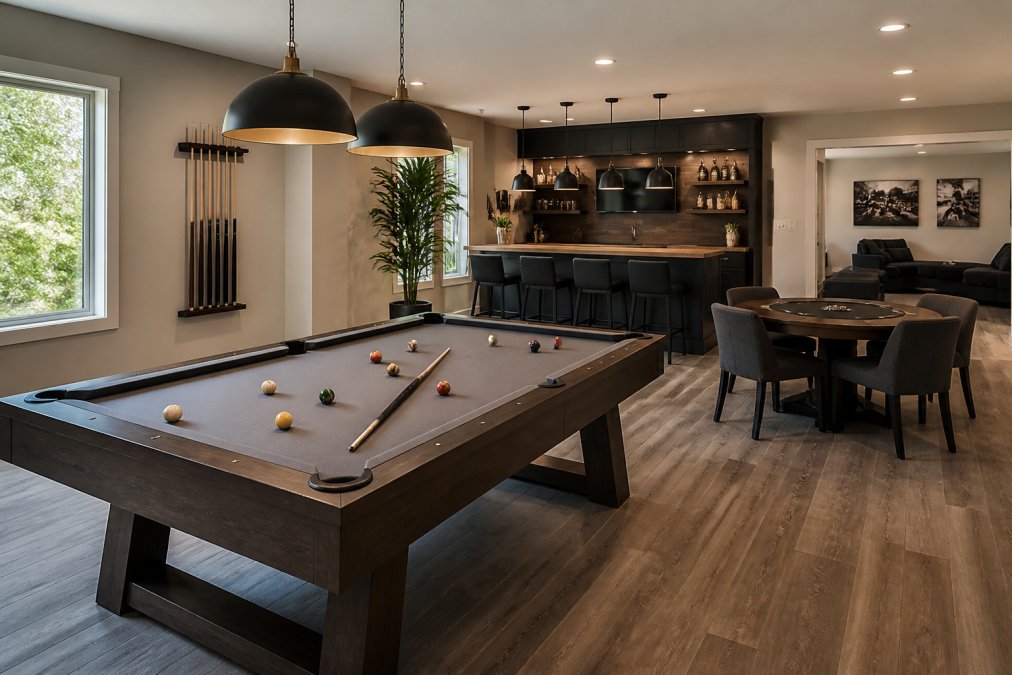
The centerpiece is typically a pool table, foosball table, or arcade cabinet. Choose based on space, budget, and expected use.
The Retreat Elite collection includes a 7 Ft Blue Top Pool Table with 2 Cues and Billiard Balls ($1,468.52), which delivers arcade-style design with a durable 18mm MDF play surface and distinctive blue polyester cloth. At 84 inches deep and 46 inches wide, it fits standard recreation rooms and comes with a ball return for league-style play. For those drawn to retro gaming, the Full-Size Commercial-Grade 2-Player Upright Standup Arcade Machine ($4,899.97) offers 4,500 classic games, responsive controls, two included shooting guns with realistic recoil, and built-in LED lighting that creates immediate visual interest. The sturdy plywood cabinet withstands enthusiastic play, and rear wheels allow repositioning when needed.

For smaller spaces or variety, the Table Soccer Arcade Game ($1,120.34) provides competition-sized foosball action at 56 inches long with durable MDF construction, chromed metal rods with textured handles, and built-in beverage racks to keep drinks within reach during matches.
Select equipment based on realistic usage. Pool tables demand maintenance and space; arcade cabinets fit tight footprints and appeal broadly; foosball is compact and low-maintenance. Most successful rooms include one primary table plus one secondary option.
Designing Lighting and Ambient Atmosphere
Most home game rooms fail at lighting. Overhead fluorescents create harsh shadows and institutional feel. Effective lighting combines multiple layers.
Task lighting illuminates game tables directly. Pool table lights hang 30-36 inches above the surface, casting even light without corner shadows. Avoid glare on screens and playing surfaces.
Ambient lighting sets mood. Neon accents create visual interest; mid-height wall fixtures provide general illumination; accent lighting behind shelving adds depth.
Smart lighting adjusts for different activities: bright task lighting for competitive play, dimmed ambient for casual hangouts, and adjustable color temperature for flexibility.
Match lighting to your color scheme: cooler white (5000K+) for modern spaces, warmer tones (2700-3000K) for retro aesthetics. Avoid mixing color temperatures.
Choosing Luxury Game Room Furniture
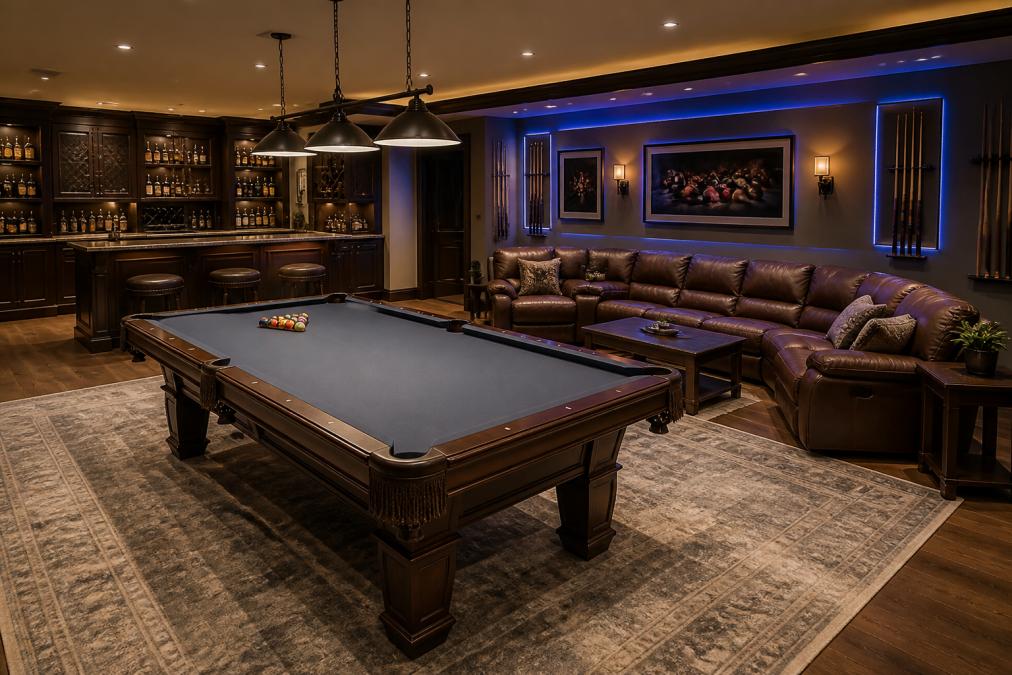
Quality furniture supports extended use while creating your desired aesthetic. Cheap seating fails quickly; mismatched pieces feel thrown together. Durability alone is insufficient, furniture must support physical health during extended sitting.
Ergonomics: The Health Foundation Most Game Rooms Ignore
Extended sitting requires ergonomic support. Game room furniture is often chosen for aesthetics alone, but poor posture causes lower back pain, neck strain, and shoulder tension over months of use.
Proper seating requires: seat height 16-18 inches (feet flat, knees at 90°), backrest angle 100-110° (lumbar support), and armrests at 90° to prevent shoulder strain.
Gaming chairs need adjustable lumbar support and seat height. For spectators, sectional sofas with firm cushioning and back support beat soft furniture.
Cushion density matters. Premium furniture costs more because internal structure is engineered for durability.
Monitor and Screen Positioning for Eye Health
Screen positioning affects eye strain and neck health. Most game rooms ignore viewing angles and distance.
Position screen tops at or slightly below eye level when seated. High screens cause neck strain; low screens cause forward lean. Raise arcade cabinets on platforms or angle screens. Mount TVs at eye level, not above fireplaces.
Viewing distance should be 1.5-2.5 times the screen diagonal. A 55-inch TV should be viewed from 6-9 feet away. Closer viewing causes eye fatigue; farther viewing reduces immersion.
Choose screens with blue light filters or anti-glare coatings.
Material Selection for Durability and Maintenance
Leather and performance fabrics resist staining and wear better than standard upholstery. Leather develops character and cleans easily; performance fabrics resist spills, fading, and pilling.
Solid wood outlasts particleboard; hardwoods are more durable than softwoods. Metal accents resist dents better than plastic or veneer. Higher upfront cost avoids replacing furniture every 2-3 years.
Modular and Flexible Furniture for Evolving Needs
Modular furniture allows reconfiguration as needs evolve. Sectionals with removable pieces and individual chairs enable repositioning for new equipment or zones.
Furniture with wheels or sliders allows repositioning without lifting, useful for arcade cabinets or game tables as collections grow.
Full-Size Commercial-Grade 2-Player →
Storage and Display Shelving
Display shelving showcases collections and glassware. Open shelving requires regular dusting; closed cabinetry maintains polish by hiding clutter.
Custom cabinetry hides equipment and maintains cohesive look. Use ¾-inch plywood shelves with support every 24 inches for heavy collections, not particle board.
Maximize vertical space with floor-to-ceiling storage. Retro rooms benefit from vintage posters or neon signs; futuristic designs need sleek metal shelving and minimalist décor.
Comfort as a Long-Term Investment
Comfortable furniture (4-6 hours) gets used regularly; uncomfortable furniture (90 minutes) gets avoided. Prioritize ergonomic support and material quality over trendy aesthetics.
Integrating High Quality Home Bar Cabinets
A quality bar transforms a game room into destination entertaining space. The RAM Pub Series 72" Dry Bar in Antique White ($1,669.00) features Malaysian oak with paneled front, generous shelving for glassware and spirits, and a removable shelf for a mini fridge.

Home bar cabinets store beverages and glassware, provide a gathering point, and anchor design. Include adequate counter space, undershelving for bottles, and display areas for premium spirits.
Match bar style to your entertaining: traditional pub-style for classic rooms, sleek modern for contemporary spaces. Finish should complement your color palette; mismatched styling fragments the space.
Ensure bar height accommodates standing guests and seated play. Provide electrical access for coolers and ventilation to prevent odors.
Acoustic Treatment for Home Game Rooms
Sound management separates pleasant game rooms from noise-broadcasting spaces. Untreated spaces bounce sound chaotically, creating overwhelming noise. Effective treatment requires understanding sound behavior in enclosed spaces.
How Sound Travels and Why It Matters
Sound reflects off hard surfaces and bounces chaotically (reverberation), creating echo and fatigue. Low-frequency noise (arcade cabinets, subwoofers) is hard to control; high-frequency noise (voices, beeps) reflects easily but travels through air gaps.
Acoustic treatment has two goals: absorption (converting sound to heat with porous materials) and isolation (preventing transmission to adjacent rooms).
Absorption: Materials and Placement
Acoustic panels trap sound in porous material. Fiberglass or melamine foam (2-4 inches) absorbs mid and high frequencies. Cover 20-30% of wall area, concentrated on parallel walls. A 12×16 ft room needs 8-12 panels.
Bass traps place thick absorption (4-6 inches) in corners where bass energy concentrates. One trap per corner noticeably reduces arcade rumble and subwoofer boom.
Ceiling treatment prevents sound bouncing. Suspended acoustic tile or fabric-wrapped panels reduce reverberation. Heavy curtains hung floor-to-ceiling create similar effect if ceiling modification isn't possible.
Fabric-wrapped panels ($40-$150) integrate into décor when color-coordinated. Exposed brick absorbs naturally. Heavy velvet or canvas curtains reduce reflections and add softness. Avoid excessive absorption that kills liveliness.
Isolation: Blocking Sound Transmission
Acoustic treatment keeps noise in the room; soundproofing prevents transmission to adjacent spaces. This matters if your game room adjoins bedrooms or offices.
Mass-loaded vinyl under flooring adds isolation. Resilient channels decouple drywall from studs. Combined with acoustic caulk sealing air gaps, they reduce transmission.
Door seals are critical weak points. Upgrade to solid-core doors (1¾ inches) with acoustic weatherstripping and door sweeps to reduce transmission.
Seal outlets with acoustic caulk and outlet gaskets. Line HVAC ducts with acoustic material or use flexible sections to reduce transmission.
Measuring and Validating Results
Practical Implementation Strategy
Wall Decor, Storage, and Final Styling Touches
Wall art and thematic styling transform a bare room into a destination. Neon accents, vintage signage, or memorabilia create visual interest. Every piece should serve a function or contribute to your aesthetic.
Frequently Asked Questions
What are the essential elements of a luxury home game room?
A luxury game room combines quality entertainment equipment (arcade machines, pool tables, or foosball tables), comfortable seating, thoughtful lighting design, acoustic treatment to manage sound, and a well-designed bar or beverage station. The space should reflect a cohesive aesthetic that matches your home's style while prioritizing comfort for extended use. High-quality furniture, strategic storage, and smart technology integration elevate the experience and ensure the room functions as both an entertainment hub and a retreat for connection and recovery.
How much does it cost to build a custom game room?
Costs vary significantly based on room size and equipment choices. A quality arcade machine runs $4,900, a pool table around $1,470, and a luxury bar cabinet approximately $1,670. Acoustic panels, lighting upgrades, and furniture add several hundred to thousands more. Budget-conscious designs can start under $5,000, while fully equipped luxury game rooms with professional acoustics, custom cabinetry, and integrated technology can exceed $20,000. Prioritize the equipment and features that align with your primary use and entertaining style.
How can I design my own gaming room with limited space?
Start by defining your room's primary purpose, whether it's a cocktail lounge, competitive gaming space, or casual entertainment area. Choose multi-functional furniture and modular pieces that adapt to your layout. Vertical storage and wall-mounted shelving maximize space without consuming floor area. Select one or two statement pieces (like a pool table or arcade cabinet) rather than cramming in multiple games. Use zoning with lighting and area rugs to define different functional areas. Smart layout planning and thoughtful furniture selection allow even compact rooms to feel sophisticated and fully functional.
What's the best way to soundproof a home game room?
Acoustic treatment requires a multi-layered approach. Install acoustic panels on walls to absorb sound from games and entertainment systems. Add bass traps in corners to control low-frequency noise. Use heavy curtains or acoustic fabric on windows. Consider soundproofing insulation in walls if you're doing renovation work. Seal air gaps around doors and vents. Carpet and rugs also help absorb sound better than hard flooring. A combination of these methods creates an immersive experience while minimizing noise that travels to other areas of your home.