 ultimate-guide
Wellness Room Design for Recovery: A Complete Guide
Table of Contents
- What Is a Wellness Room and Why Recovery Matters
- Planning Your Home Recovery Room Design
- Recovery Room Equipment: Choosing What Works for You
- Small Wellness Room Ideas: Making the Most of Limited Space
- Wellness Room Lighting Ideas for Calm and Restoration
- Creating the Atmosphere: Design, Color, and Sensory Elements
- Building Your Recovery Routine and Measuring Success
- Frequently Asked Questions
Last Updated: October 11, 2026
What Is a Wellness Room and Why Recovery Matters
A wellness room design for recovery integrates dedicated spaces and equipment to support your body's restoration between workouts, stressful periods, and daily life. It combines purposeful equipment, thoughtful lighting, and a calming environment to create a personal recovery sanctuary.
Recovery isn't optional for high-performing individuals. The body adapts and strengthens during rest, not during effort itself. A dedicated recovery space accelerates results and makes consistency effortless, when tools are accessible at home, you use them.
Success depends on three factors: the modalities you choose, how you arrange the space, and whether the environment promotes relaxation.
This guide covers space planning, equipment selection, lighting strategies, and atmospheric elements that transform a wellness room design for recovery into one you'll actually use daily.
Planning Your Home Recovery Room Design
A wellness room design works only when it matches your space and lifestyle.
Assessing Your Space and Layout
Measure the room: length, width, ceiling height, and architectural features. A 12-by-14-foot room is workable; 10-by-10 feet is tight but functional. Anything smaller than 80 square feet challenges multiple modalities.
A recovery room works best when it feels separate from the rest of your home. If family members pass through constantly, the calming atmosphere dissolves.
Electrical capacity matters significantly. A sauna draws 30-50 amps; red light panels and advanced systems require dedicated circuits. Have an electrician assess whether your current panel can handle the load before committing to equipment.
Ventilation is non-negotiable for heat-based modalities. A sauna without proper exhaust becomes a humidity trap that damages walls and encourages mold. Budget for HVAC modifications if your space lacks adequate airflow.
Setting a Realistic Budget
Premium systems like the Protocol⁴ Lounge System cost $223,000 but consolidate multiple modalities into one footprint.
Factor in installation, electrical work, flooring, soundproofing, and climate control.
Identify your non-negotiables. Sleep quality demands lighting and sound therapy. Post-workout recovery requires massage and heat. Inflammation management or cellular optimization requires light therapy and advanced technologies.
Recovery Room Equipment: Choosing What Works for You
Equipment selection depends on your specific recovery goals and how much time you'll dedicate to your wellness routine. The best recovery room includes modalities you'll actually use consistently.
Heat-Based Recovery: Saunas and Steam
Heat therapy increases circulation and promotes deep muscle relaxation.
The Thermora Alpine Premium 2-Person 3KW Hemlock Wood Sauna ($3,599.97) delivers traditional sauna benefits in a compact footprint. The 3KW heater reaches 194°F; hemlock wood construction and integrated LED lighting create an inviting atmosphere that encourages regular use.
A sauna needs proper ventilation, a dedicated circuit, and ideally a separate room to prevent humidity damage. Portable infrared saunas cost less upfront but are smaller and less luxurious.
Light Therapy and Photobiomodulation
Red and near-infrared light wavelengths support cellular energy production, circulation, and muscle recovery.
The 3600W Red Light Panel from Protocol ($8,900) delivers high-intensity exposure across multiple wavelengths (630, 660, 810, 830, and 850 nm). For daily users, the intensity and full-body coverage justify the cost and integrate seamlessly into a wellness room design.
Massage and Pressure-Relief Systems
Massage accelerates recovery by increasing blood flow and reducing muscle tension. A quality massage chair becomes a daily recovery ritual.
The Airvana Sovereign Zero-Gravity Massage Chair ($999.97) combines affordability with therapeutic benefit. Zero-gravity positioning relieves spinal pressure; six rollers target deep tissue knots; air compression embraces shoulders, arms, and legs. Built-in Bluetooth pairs with calming audio.
This chair requires no installation and works in smaller spaces, making it a high-ROI purchase for a wellness room design on a budget.
Advanced Recovery Technologies
The Protocol⁴ Lounge System ($223,000) combines hyperbaric oxygen therapy (OxyDome), full-body photobiomodulation (P6 Capsule), and PEMF therapy with red and infrared heat (Cocoon) for comprehensive cellular optimization.
The OxyDome delivers controlled pressurization and high-concentration oxygen; the P6 Capsule uses multiple wavelengths for full-body light exposure; the Cocoon integrates PEMF, red light, and infrared heat for nervous system regulation.
Using all three together creates a synergistic effect that promotes tissue repair, reduces physiological stress, and supports long-term wellness in a way no single technology can achieve alone.
Small Wellness Room Ideas: Making the Most of Limited Space
Not every home has a dedicated 200-square-foot space. If you're working with constraints, strategic equipment selection and layout maximize functionality.
A 10-by-12-foot room can accommodate a quality massage chair, a compact red light panel on a wall mount, and a small sauna if you choose a corner or barrel design. The key is vertical thinking: use wall space for light therapy and storage. Keep the floor open for movement and stretching.
Multipurpose equipment reduces footprint demands. The inHarmony Sound Lounge at $5,678 combines sound therapy with vibration therapy in a single chair. It's foldable, which matters for small spaces. You can position it for sessions and fold it away when not in use, though the regular user will want permanent placement.
Portable equipment offers flexibility. Layer these into your small wellness room design, and you create sophisticated recovery options without requiring extensive square footage.
Storage is critical in small spaces. Install wall-mounted shelving for towels, essential oils, and recovery supplements. A compact storage bench doubles as seating and organization.
Wellness Room Lighting Ideas for Calm and Restoration
Lighting determines whether a space feels restorative or clinical. Poor lighting undermines even the best equipment.
Natural Light and Window Placement
Natural light is free therapy. Position your wellness room where it receives morning or late-afternoon sunlight. Avoid harsh midday sun, which feels intense rather than calming.
Ambient and Task Lighting
Layer your lighting into three zones: ambient (overall room brightness), task (for specific activities like reading or massage), and accent (for atmosphere).
Ambient lighting should be warm (2700K color temperature or lower).
Install dimmers on all ambient fixtures. The ability to adjust brightness from 10% to 100% lets you customize the environment for different times of day and different activities. A sauna session might call for 50% ambient light. A meditation session might demand 20%.
Task lighting, focused light over a massage chair or reading nook, should be separate from ambient lighting so you can control it independently. Accent lighting, like the integrated LED wall light in the Thermora sauna, adds visual interest and supports the overall atmosphere without overwhelming the space.
Creating the Atmosphere: Design, Color, and Sensory Elements
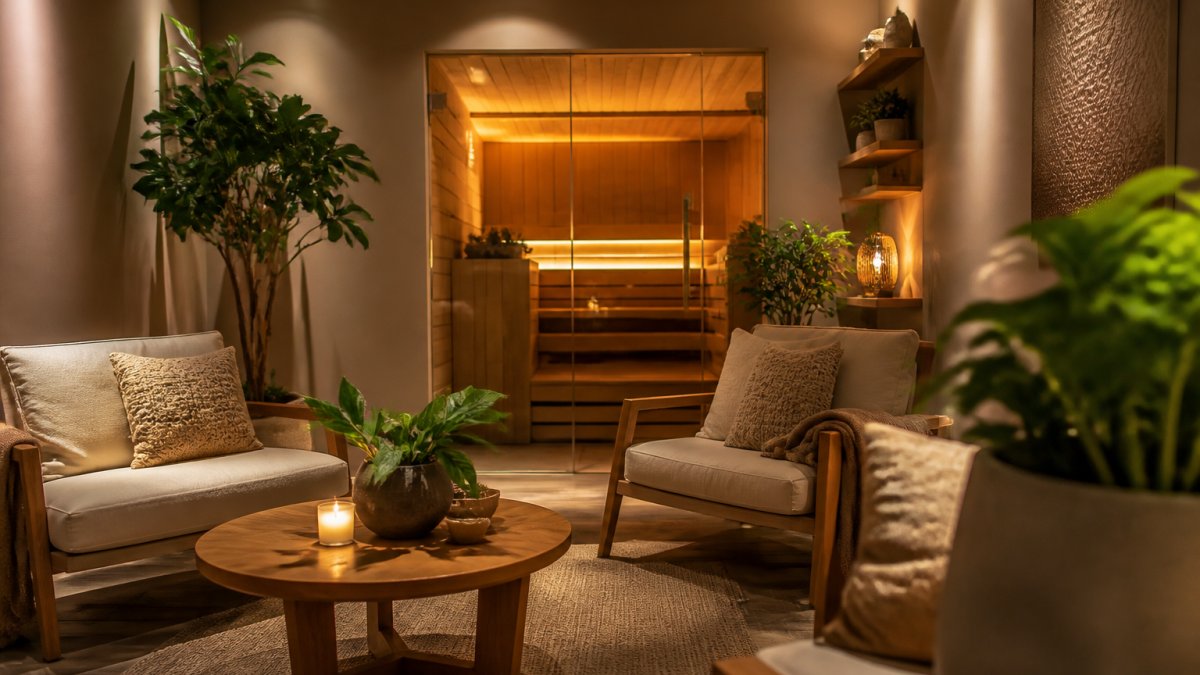
A wellness room design succeeds or fails based on atmosphere. Equipment matters, but environment shapes experience.
Color Psychology and Calming Palettes
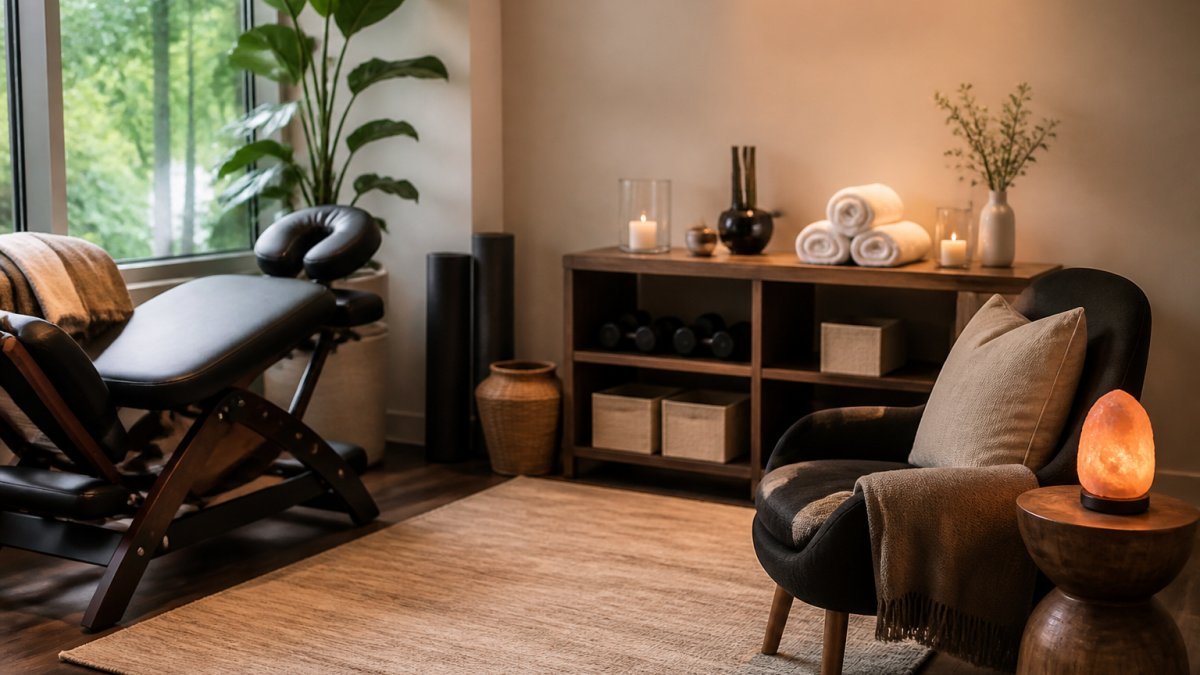
Color influences nervous system state. Warm neutrals, beige, taupe, soft gray, feel grounding without stimulation. Avoid bright whites, which feel institutional, and saturated colors, which feel energizing rather than restorative.
Paint your wellness room in soft earth tones or muted blues. If you prefer greens, choose sage or celadon rather than vibrant kelly green. The goal is a palette that recedes into the background, allowing your attention to rest rather than engage.
Flooring matters. Warm wood or cork feels more welcoming than cold tile. If you're installing a sauna or steam room, choose slip-resistant flooring that handles moisture.
Biophilic Design and Natural Elements
Biophilic design, integrating natural elements into built spaces, reduces stress and supports recovery. Plants are the simplest intervention.
Natural materials reinforce the biophilic effect. The Thermora sauna's hemlock wood construction creates visual warmth. Wooden furniture, stone accents, and natural fiber textiles all support the sense of being in a natural recovery environment rather than a clinical space.
Water features, a small fountain or indoor water wall, add auditory and visual calm. If space allows, even a tabletop fountain contributes meaningfully to atmosphere.
Privacy, Sound Control, and Ventilation
A recovery space requires genuine privacy. If your wellness room is visible from hallways or other living areas, the sense of sanctuary dissolves. If possible, choose a room with a solid door and minimal visual access from other spaces.
Sound isolation prevents external noise from disrupting relaxation. Heavy curtains, acoustic panels, or sound-dampening insulation in walls reduce noise transmission.
Ventilation serves dual purposes: it manages humidity from heat-based modalities and provides fresh air circulation. A quiet ventilation system is essential, loud fans undermine the calm atmosphere.
The inHarmony Sound Lounge's Sennheiser HD noise-canceling headphones isolate you from external sound while delivering therapeutic frequencies. Pairing this with good room-level acoustics creates a genuinely private soundscape.
Building Your Recovery Routine and Measuring Success
Equipment and atmosphere mean nothing without consistent use. A recovery routine transforms a wellness room from an investment into a practice.
Start with a realistic schedule. A 30-minute daily recovery session is sustainable. Anything longer than 60 minutes becomes a time commitment most people abandon. A typical routine might include 15 minutes in a sauna, 10 minutes of red light exposure, and 10 minutes in a massage chair.
Track outcomes that matter to you. Sleep quality, morning soreness, energy levels, and stress perception are measurable even without biometric devices.
A wellness room design for recovery transforms how you manage stress, accelerate physical recovery, and support long-term health. The investment in space, equipment, and atmosphere pays dividends in sleep quality, resilience, and daily performance.
At Retreat Elite, we help you curate the pieces that work for your specific goals and space.
Frequently Asked Questions
What should be included in a wellness room for recovery?
A wellness room typically combines recovery equipment (sauna, massage chair, or light therapy panels), comfortable seating, calming lighting, plants, and soundproofing. Your specific setup depends on your recovery goals, whether you prioritize heat therapy, muscle relaxation, or nervous system regulation. Start with one or two core modalities and expand from there based on your space and budget.
How can you create a wellness room in a small space?
Focus on multi-functional equipment and vertical storage. A zero-gravity massage chair occupies minimal floor space while offering full-body recovery benefits. Wall-mounted light therapy panels, compact saunas, or foldable sound lounges maximize utility without overwhelming the room. Use mirrors and light-colored walls to enhance perceived space, and keep pathways clear for safe movement and relaxation.
What lighting is best for a relaxing recovery room?
Combine natural light with dimmable ambient lighting and warm color temperatures (2700K-3000K). Avoid harsh overhead lights; instead, use wall sconces, recessed lighting on dimmer switches, or soft floor lamps. If your room lacks windows, full-spectrum or warm LED panels create a calming environment. Integrated lighting in recovery equipment, like the LED wall light in premium saunas, adds therapeutic ambiance without requiring additional fixtures.
What is the difference between a wellness room and a recovery room?
A wellness room emphasizes overall health and prevention through meditation, relaxation, and holistic practices. A recovery room focuses specifically on physical rehabilitation and post-workout recovery using targeted modalities like heat therapy, light therapy, and massage. Many home spaces blend both functions, combining meditation areas with active recovery equipment to address mental and physical restoration simultaneously.
How do you design a wellness room for recovery at home?
Start by defining your primary recovery goals, stress relief, muscle recovery, sleep improvement, or cellular health. Assess your available space and budget, then select equipment that aligns with those priorities. Layer in sensory elements: calming colors, plants, soft lighting, and sound control. Plan ventilation and electrical requirements early, especially for heat-based equipment. Test your layout before purchasing to ensure comfort and flow.
Can a sauna fit into a home wellness room?
Yes. Saunas range from compact 2-person models (like the Thermora Alpine at 3KW) to larger installations. A 2-person sauna typically requires 4x6 feet of floor space and dedicated 240V electrical service. Ensure your room has proper ventilation, insulation, and flooring that resists moisture. Many homeowners integrate saunas as the centerpiece of their recovery room, pairing them with massage chairs or light therapy for comprehensive post-session restoration.
What features make a wellness room feel calming and restorative?
Incorporate biophilic design elements like plants, natural wood tones, and views of nature if possible. Use soft, warm lighting (avoid bright whites), neutral or earth-tone colors, and comfortable seating or lounging surfaces. Add sound management through acoustic panels or white noise to minimize external distractions. Include aromatherapy options and ensure the space is private and free from interruptions. These sensory layers work together to activate your parasympathetic nervous system.