 how-to
How to Verify Furniture Quality: A Buyer's Guide
Table of Contents
- How to Verify Furniture Quality: Start With Materials
- How to Inspect Furniture Before Buying: Frame and Construction
- Assessing Surface Finish, Wood Grain, and Visible Defects
- Inspecting Drawers, Doors, Hardware, and Moving Parts
- Evaluating Upholstery, Leather, and Fabric Quality
- Furniture Quality Checklist: Room-by-Room Inspection
- Understanding Furniture Warranty and Return Policy
- How to Assess Furniture Quality from Online Listings
- Frequently Asked Questions
Last Updated: October 18, 2026
How to Verify Furniture Quality: Start With Materials
Knowing how to verify furniture quality separates smart buyers from those who regret expensive purchases. Whether you're shopping for a media console, reclining loveseat, or pool table, wood type and frame construction determine how long your furniture lasts.
The first step is always the same: understand what you're looking at, not just the price.
Solid Wood vs Engineered Wood Furniture
Solid wood is cut directly from trees. It's durable, repairable, and typically more expensive, lasting decades with proper care.
Engineered wood uses real wood veneers bonded to plywood or MDF. It's cheaper and resists warping better in extreme climates, but you can't refinish it, and veneer damage is harder to repair.
Solid wood wins on longevity and repairability; engineered wood wins on stability and cost.
The NTC Sapa Mid-Century Modern TV Stand uses premium solid wood with a walnut finish, giving it durability and timeless appeal that engineered alternatives cannot match.

Veneer, Particleboard, and Other Frame Materials
Wood veneer is a thin layer of real wood glued to a cheaper base. Quality veneer is acceptable; poor-quality veneer peels, bubbles, or shows seams over time.
Particleboard is compressed wood particles held together with adhesive. It's the cheapest, weakest option, absorbing moisture and deteriorating quickly. Avoid it for anything supporting weight.
MDF (medium-density fiberboard) is denser and more stable than particleboard and holds fasteners better.
Look at the underside of furniture. Flip drawers over. Check the back panels. If you see particleboard, that piece won't last. MDF is acceptable. Plywood is good.
How to Inspect Furniture Before Buying: Frame and Construction
The frame is the skeleton of your furniture. A weak frame fails long before the upholstery wears out.
Check Joints, Joinery, and Fasteners
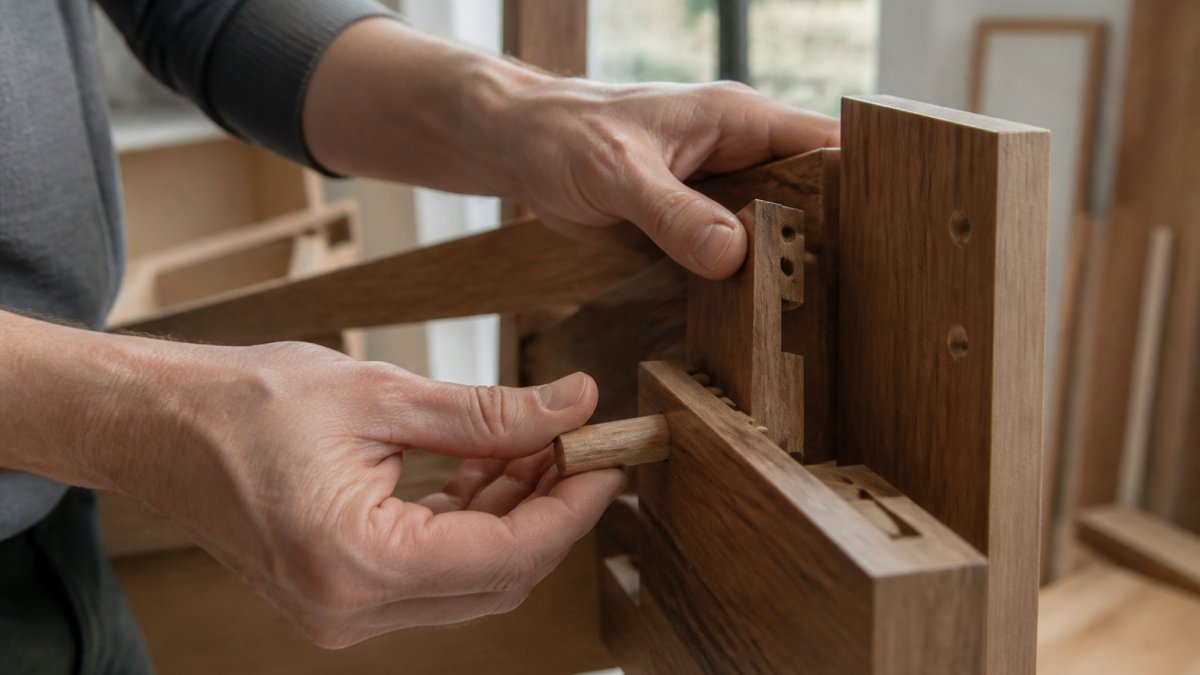
Quality joinery separates furniture that lasts from furniture that falls apart. Know these joints:
- Mortise-and-tenon joints: A protruding piece (tenon) fits into a cavity (mortise). This is the strongest joint and takes skill to execute. You'll find it in high-end pieces.
- Dowel joints: Wooden dowels connect two pieces. Stronger than nails, weaker than mortise-and-tenon. Common in mid-range furniture.
- Pocket hole joints: Fasteners driven at angles from the inside. Quick and reasonably strong. Acceptable for most furniture.
- Butt joints: Two pieces simply glued or nailed together. The weakest option. Avoid this.
Run your hand along every joint, feel for gaps, and wiggle the connection. It should not move. Look for reinforcement: corner blocks, metal plates, or additional fasteners.
Fasteners matter too: screws beat nails, and bolts are best. Nails holding a frame together are a red flag.
The 8FT Premium Professional Presli Slate Pool Table uses solid acacia wood with properly constructed joinery designed to handle the stress of professional play.

Test Stability and Sturdiness
Sit on it, push on corners, and rock it gently. A small creak is normal; loud creaking or movement means loose joints or a weak frame.
For tables, press down on opposite corners and try lifting one while pushing down on the other.
For chairs and sofas, sit down firmly, stand up, and sit again. The piece should be rock-solid; any play will get worse over time.
Check the legs. They should be securely attached, ideally with corner blocks underneath; legs attached only with screws from the top will loosen.
Assessing Surface Finish, Wood Grain, and Visible Defects
The surface is what you see and touch every day. A poor finish looks cheap and fails quickly; a quality finish protects the wood for years.
Evaluate Color, Smoothness, and Finish Quality
Run your hand across the surface. It should feel smooth with no rough spots, splinters, or raised grain.
Color should be even across the entire piece. Blotchy color or streaky stain suggests rushed finishing.
Check the edges. Rounded edges feel better and last longer; sharp edges chip and splinter easily.
Feel the finish itself. Glossy, satin, or matte is personal preference, but it should be even. Glossy shows fingerprints; satin and matte hide imperfections better.
Look for bubbling, streaking, or drips. These signal poor application; quality finishes are smooth and uniform.
Spot Knots, Cracks, Voids, and Imperfections
Natural wood has character. Knots, grain variation, and color differences are normal; what matters is whether they affect function.
Small knots are fine.
Cracks are more serious.
Voids are missing sections of wood, usually near knots. Small voids are cosmetic. Large voids weaken the structure.
Check the grain direction. Grain running along the length of a leg is strong.
Look for signs of repair. Filled knots, patched areas, or wood filler should be smooth and match the surrounding finish.
Inspecting Drawers, Doors, Hardware, and Moving Parts
Moving parts reveal quality faster than anything else. Cheap drawers stick or fall apart.
Open and close every drawer and door. They should move smoothly without sticking or binding.
Check drawer slides. Metal slides are better than wood.
Look inside drawers. Are the bottoms solid or are they thin plywood? Solid bottoms support weight better.
Examine doors. They should hang straight and close smoothly. Open and close them several times.
Check hardware. Knobs and handles should be securely attached. Turn them gently. They should not wiggle.
Test any moving mechanisms like reclining chairs or adjustable features.
Evaluating Upholstery, Leather, and Fabric Quality
Upholstered furniture is judged by what you see and what you feel. Quality upholstery is comfortable, durable, and attractive.
NTC Sapa Mid-Century Modern Solid Wood TV Stand 4-Door Media Console →
Leather Grade and Genuine Materials
Real leather comes in grades. Top-grain leather is the highest quality.
Full-grain leather includes the entire thickness of the hide. It's the most durable and most expensive.
Genuine leather is real leather but lower quality. It's been processed and may have defects repaired.
Bonded leather is leather scraps glued together. It's not real leather and deteriorates quickly. Avoid bonded leather.
PU (polyurethane) is synthetic leather. It's not real leather but can be durable if well-made.
The Angelo Power Reclining Loveseat features genuine Italian top-grain cowhide leather where your body touches the piece, with precision-matched PU on the outside back and sides.

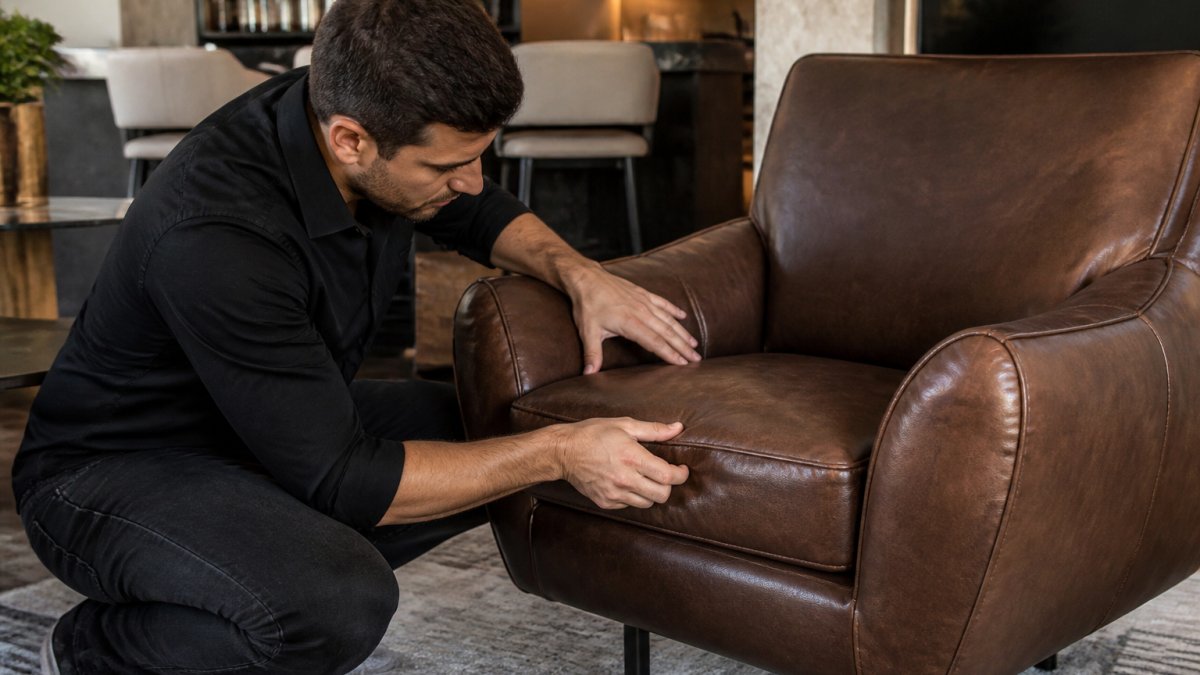
Check the leather by touch. Real leather feels warm and supple. Synthetic leather feels plastic and cold.
Stitching, Seams, and Padding Support
Examine the stitching carefully. Seams should be straight and even. Stitches should be tight with no gaps.
Count the stitches per inch. More stitches mean stronger seams. Aim for at least 10 stitches per inch.
Look at seam placement. Seams on high-stress areas like armrests and cushion edges should be reinforced. Double stitching or topstitching adds strength.
Check the padding. Press on cushions and seats. They should feel firm but comfortable.
Feel the padding density. High-quality padding is dense and resilient. Low-quality padding is thin and squishy. Flip cushions over.
Furniture Quality Checklist: Room-by-Room Inspection
Use this checklist when evaluating any piece:
Frame and Construction
- Frame material is solid wood, plywood, or quality MDF (not particleboard)
- Joints are tight with no gaps or movement
- Fasteners are screws or bolts, not nails
- Legs are securely attached with corner blocks underneath
- No visible cracks, splits, or major defects in structural areas
- Piece does not wobble or flex when tested
Surface and Finish
- Surface is smooth with no rough spots or splinters
- Color is even and consistent across the entire piece
- Finish is uniform with no bubbling, streaking, or drips
- Edges are rounded and smooth, not sharp
- Natural knots and grain variation are acceptable and not excessive
- No visible repairs or patches that look poorly done
Hardware and Moving Parts
- All drawers and doors open and close smoothly
- Drawer slides are metal with ball bearings
- Hinges are solid and not loose
- Knobs and handles are secure and don't wiggle
- Any mechanical features operate smoothly multiple times
Upholstery (if applicable)
- Fabric or leather feels quality and appropriate to the price
- Stitching is straight, even, and tight with no gaps
- Seams are reinforced in high-stress areas
- Padding is firm and resilient, not flat or squishy
- No visible stains, odors, or damage
Overall Assessment
- Piece feels sturdy and well-built
- Finish and details match the price point
- No signs of damage, poor repair, or manufacturing defects
Understanding Furniture Warranty and Return Policy
Before buying, understand what happens if something goes wrong. Warranties and return policies vary widely.
A good warranty covers defects in materials and workmanship for at least one year. Warranties that only cover one month are weak.
Check what the warranty actually covers. Does it cover structural defects? Does it cover finish issues?
Return policies matter too. Can you return a piece if it doesn't fit your space or doesn't look right in person?
Ask about damage during shipping. Who pays if the piece arrives damaged? Get documentation of any damage before accepting delivery.
For high-value pieces, ask about protection plans.
How to Assess Furniture Quality from Online Listings
Buying furniture online without seeing it in person requires extra care.
Look at photos from multiple angles.
Read the product description carefully. Quality descriptions include material specifications, dimensions, weight, and assembly requirements.
Check for close-up photos of details.
Look at customer reviews if available. Real customer feedback reveals problems quickly.
Ask questions before buying.
Request a video if possible.
Check the return policy carefully. Make sure you understand who pays for return shipping.
Verify shipping and delivery. Ask how the piece will be packaged and protected.
When you're ready to furnish your entertainment space, game room, or wellness area, the quality of each piece matters. Browse our selection of premium entertainment and wellness pieces, and let us help you choose furniture built to last. Browse →
Frequently Asked Questions
How can you tell if furniture is good quality?
Quality furniture combines solid materials, precise construction, and durable finishes. Examine the frame material, solid wood or hardwood plywood indicates better quality than particleboard. Check joints for tight connections without gaps, test stability by gently pressing on corners, and run your hand over surfaces for smooth finishes without bubbling or streaks. Genuine leather, high-thread-count fabric, and reinforced seams signal durability. Compare the craftsmanship details: are edges smooth, are hardware pieces solid, do drawers glide smoothly? Premium pieces like the NTC Sapa TV Stand use handcrafted solid wood with precision joinery, which you can verify by inspecting the frame directly.
What materials indicate well-made furniture?
Solid wood and hardwood plywood frames outlast engineered alternatives. Solid wood, oak, walnut, acacia, or teak, resists warping and supports weight reliably. Hardwood plywood with quality veneer provides stability. Avoid particleboard for weight-bearing pieces; it swells when exposed to moisture and fails under stress. For upholstered items, genuine leather (top-grain or full-grain) and high-quality fabrics with reinforced seams last longer than synthetic substitutes. Quality cushioning uses pocketed coil springs or high-density foam, not cheap foam alone. Hardware should be metal, not plastic. When you inspect the manufacturer tags and product labels, they often list materials, this transparency signals confidence in construction.
What should I look for in a furniture warranty?
A solid warranty covers workmanship defects for at least one year. Check whether the warranty covers the frame, joints, springs, and cushioning or only cosmetic defects. Understand what voids the warranty, water damage, normal wear, or misuse may not be covered. Review the return policy: can you return if the piece doesn't fit your space? Does the company cover shipping costs for defective items? Retreat Elite provides clear product information and expert guidance via phone and email, helping you understand coverage before purchase. Always request warranty documentation in writing before finalizing your order.
How can I assess furniture quality when shopping online?
Request detailed photos showing joints, wood grain, fabric texture, and hardware from multiple angles. Ask for close-ups of seams, stitching, and any imperfections. Request dimensions in inches and depth measurements to confirm fit. Read customer reviews for durability reports and shipping damage feedback. Check manufacturer certifications and safety standards listed on the product page. Ask the retailer about return policies. Reputable sellers like Retreat Elite provide comprehensive product specifications, dimensions, and expert support via phone and email, allowing you to verify quality details before committing to a high-value purchase.