 how-to
Premium Home Upgrades: ROI and Value
Table of Contents
- Understanding the Real Value of Premium Home Upgrades
- Home Improvements With the Best Return on Investment
- Premium Home Upgrades Worth the Cost
- High-End Home Renovation Ideas for Everyday Enjoyment
- Home Bar Cabinets and Premium Hosting Features
- How to Prioritize Premium Upgrades for Your Home
- Upgrades That Can Hurt Resale Value
- Frequently Asked Questions
Last Updated: October 15, 2026
Understanding the Real Value of Premium Home Upgrades
When you invest in your home, you're choosing how you want to live. Premium home upgrades aren't just about resale value, they're about the everyday experience of your space.
The term premium home upgrades refers to high-quality improvements beyond standard renovations, pieces and installations that elevate function and aesthetics, from wellness amenities like saunas and whirlpool bathtubs to entertainment and hosting features.
Not all upgrades deliver equal value. Some recoup most of their investment at sale; others create personal value unrelated to resale.
Home Improvements With the Best Return on Investment
Certain upgrades consistently deliver strong resale value: those addressing fundamental home systems, appealing to broad buyer preferences, or enhancing the most-used spaces.
Kitchen and Bathroom Upgrades
Kitchen and bathroom renovations rank among the highest-value home improvements because they're expensive to update and directly impact daily living.
A minor kitchen remodel, updating countertops, hardware, and fixtures while keeping the layout, typically delivers solid returns.
Bathroom updates follow a similar pattern.
Kitchen and bathroom upgrades return value because they're expensive, visible, and functional, buyers expect these spaces to be current and well-maintained.
Exterior and Curb Appeal Projects
Your home's exterior is the first thing buyers see. Strong curb appeal drives interest before anyone steps inside.
Entry door replacement makes a measurable difference.
Garage door replacement offers similar returns: a modern, well-functioning door improves aesthetics and functionality, and buyers notice a worn one immediately.
Landscaping matters more than many homeowners realize.
| Upgrade Type | Typical Appeal | Best For |
|---|---|---|
| Kitchen remodel | High | Most markets |
| Bathroom update | High | Most markets |
| Entry door | Moderate-High | All markets |
| Garage door | Moderate | All markets |
| Siding/veneer | Moderate-High | Varies by region |
| Landscaping | Moderate | Curb-focused buyers |
Premium Home Upgrades Worth the Cost
Not every valuable upgrade is about resale. Some premium home upgrades deliver personal value that justifies their cost regardless of market return.
Wellness and recovery spaces have become increasingly important to homeowners. The wellness design trends in residential homes show that homeowners increasingly prioritize personal recovery spaces.
The Thermora Alpine Premium 2-Person Sauna creates a personal sanctuary at home.

Entertainment and hosting spaces represent another category of premium upgrades worth the cost.
High-End Home Renovation Ideas for Everyday Enjoyment
The best premium home upgrades are ones you'll actually use and enjoy, shifting focus from resale potential to personal experience.
Wellness and Recovery Spaces
Dedicated wellness spaces have moved from luxury to necessity for many homeowners, a sauna, hot tub, or recovery room becomes a place where you genuinely reset.
A home sauna creates a consistent wellness ritual.
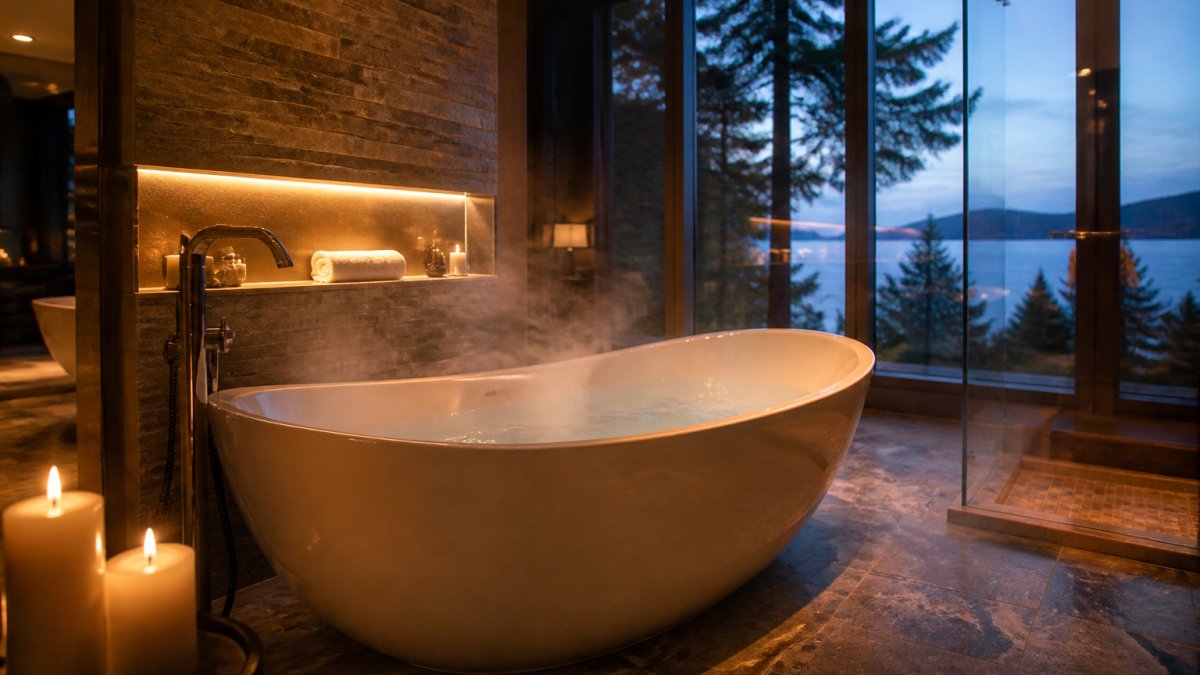
A luxury bathtub with hydromassage jets serves a similar purpose. After a long day, the targeted massage jets address muscle tension and fatigue.
Entertainment and Hosting Spaces
Your home should be a place where you want to gather, and premium entertainment upgrades make hosting effortless.
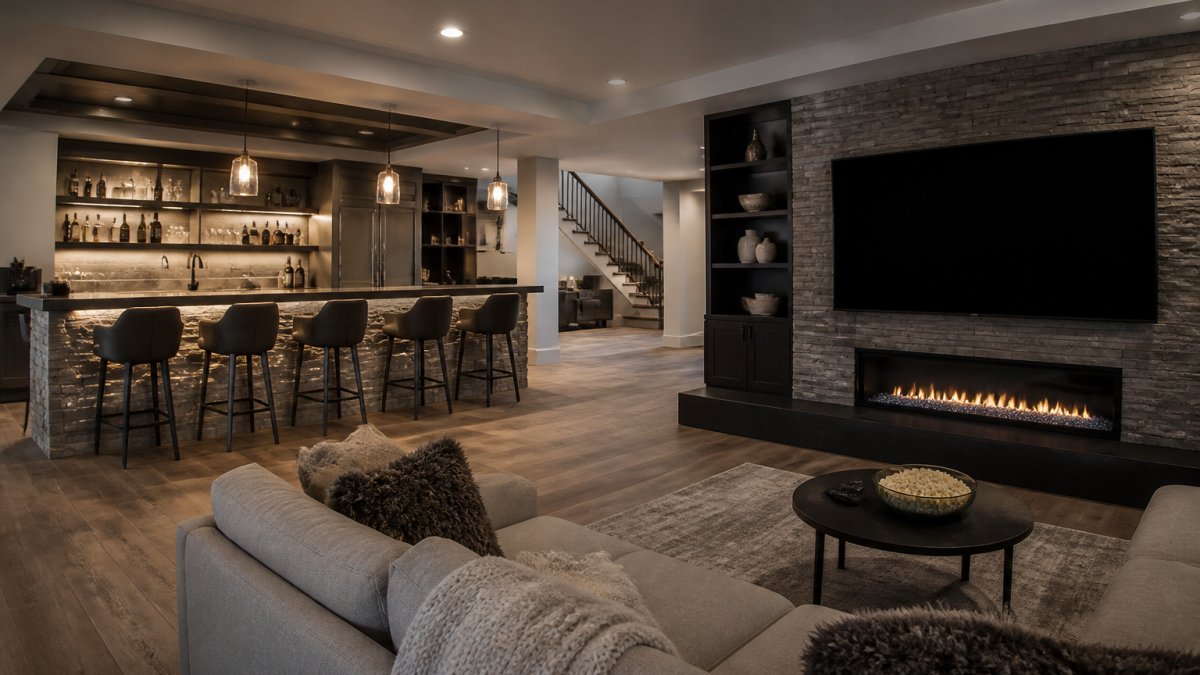
A home bar with quality cabinetry and proper lighting transforms your entertaining. Rather than mixing drinks on a kitchen counter, you have a dedicated space designed for hospitality, and a temperature-controlled wine cabinet preserves and displays your collection beautifully.

A power reclining loveseat like the Angelo at $1,759.98 creates comfort for movie nights or relaxation. The lay-flat recline and adjustable headrest let you truly unwind.
The difference between adequate and excellent hosting spaces comes down to intentionality.
Home Bar Cabinets and Premium Hosting Features
A home bar represents one of the clearest statements of how you want to live.
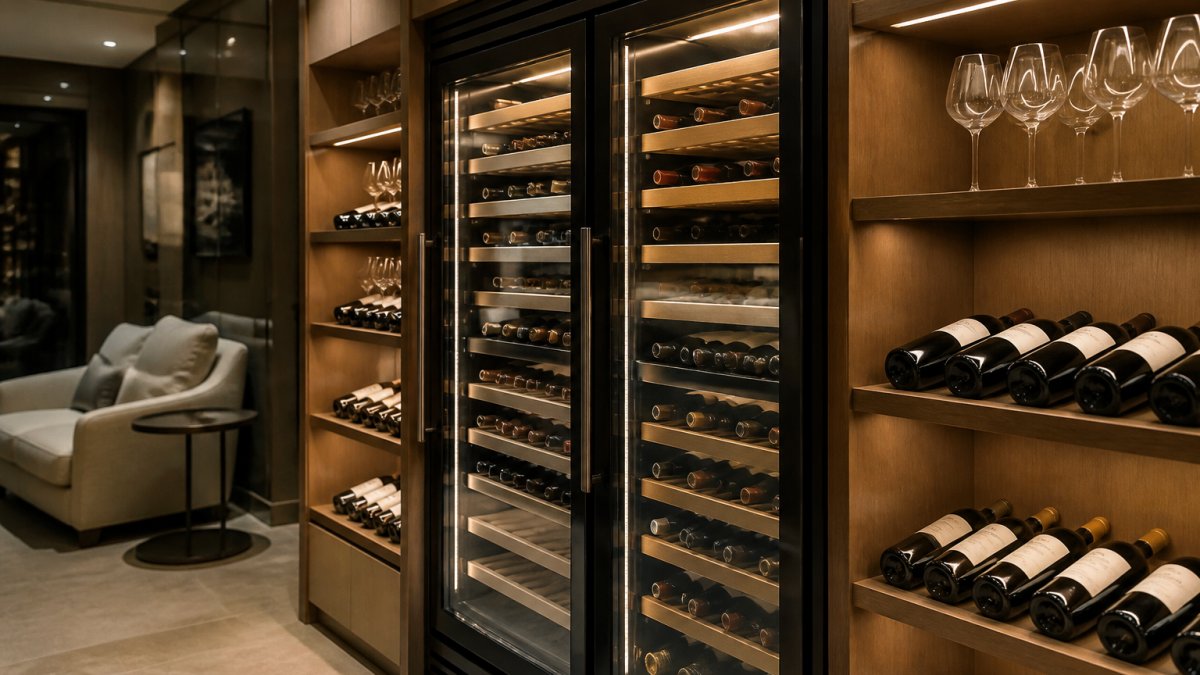
Quality wine storage with temperature control preserves your collection and displays it as an asset.
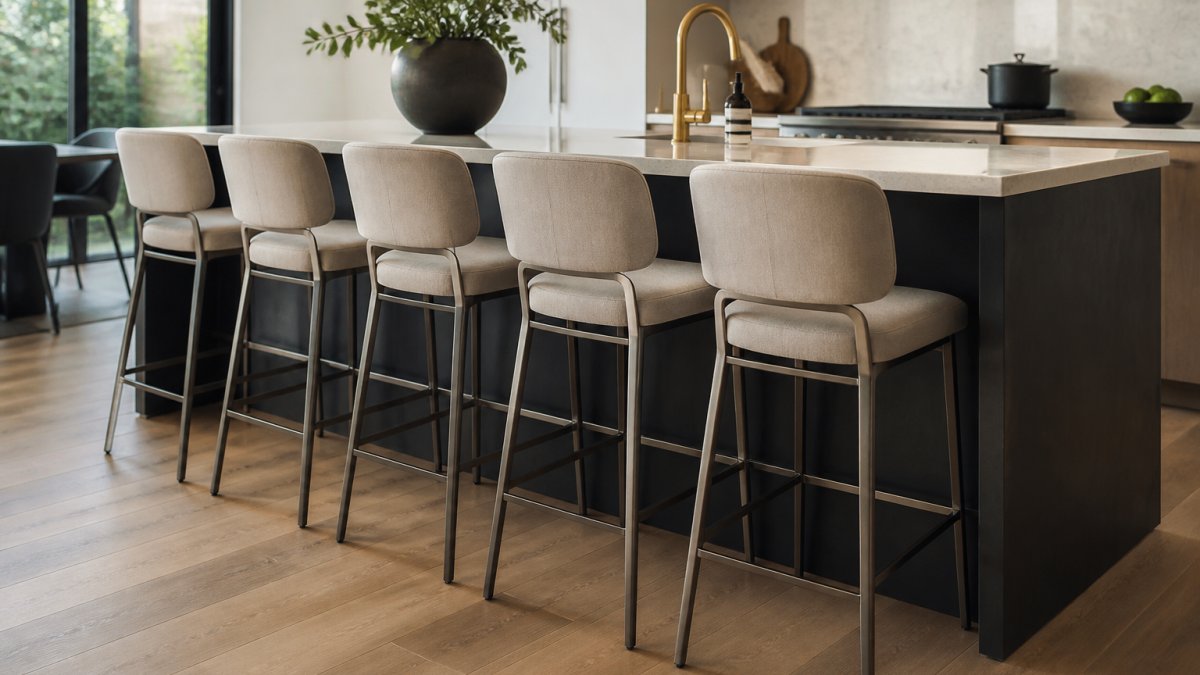
Bar seating, proper lighting, and organized glassware and spirits storage create an experience.
Premium bar cabinetry pays dividends in how often you use your space and how much you enjoy it.
How to Prioritize Premium Upgrades for Your Home
With a limited budget, prioritizing matters. Instead of an unranked list of renovations, use a repeatable framework that scores each candidate project against your home, market, budget, and timeline, then forces you to justify the winner.
Thermora Alpine Premium 2-Person 3KW Hemlock Wood Sauna With LED Wall Light →
Step 1: Set Your Price Ceiling Before You Set Your Budget
Before choosing any project, find the top of your neighborhood's price range.
That number is your practical ceiling. A premium upgrade that pushes a home past the neighborhood ceiling usually isn't recovered at sale, because buyers in that price band compare your home against larger or newer homes.
Step 2: Score Each Project on Five Factors
Rate every candidate project from 1 (weak) to 5 (strong) on each line, then total. This is a judgment tool, not a formula, its value is forcing the comparison.
| Factor | What a 5 Looks Like | What a 1 Looks Like |
|---|---|---|
| Resale impact | Broad buyer appeal, addresses a system or room buyers inspect | Highly personal, appeals to a narrow buyer type |
| Personal use | Used daily or weekly by your household | Used a few times a year |
| Disruption | Contained to one room, short duration, minimal dust and noise | Whole-home impact, months of trades in and out |
| Ongoing cost | Low maintenance, standard parts, easy to service | Specialized maintenance, proprietary parts, seasonal service |
| Fit with the home | Matches the home's age, style, and price band | Exceeds the home's price band or clashes with its architecture |
A kitchen refresh often scores 4-5 on resale and 4-5 on personal use, which is why it dominates most lists.
Step 3: Separate the Two Budgets
Treat resale-driven spending and personal-value spending as separate pools. Resale-driven projects are judged against cost recouped at sale; personal-value projects against what the same money would buy elsewhere, a decade of spa visits, a gym membership, a vacation, and how many years you expect to stay.
A simple break-even frame: divide project cost by the years you expect to remain in the home. A $3,600 sauna used for eight years costs about $450 per year, or roughly $37 per month.
Step 4: Sequence by Disruption and Permits
Order projects so anything requiring permits, rough-in work, or wall or floor opening happens before cosmetic finishes, running electrical for a sauna or bar after installing new flooring and cabinetry means redoing finished work. Sequence: structural and system work first, then rough electrical and plumbing, then cabinetry and fixtures, then flooring and paint, then furnishings and decor.
Step 5: Recheck the Math Annually
ROI benchmarks shift with the market. A project that penciled out two years ago may look different after a rate change or a shift in local inventory. Revisit your ceiling number and cost assumptions annually, and adjust the next project rather than re-litigating completed work.
Understanding ROI Limitations and Market Variables
ROI for home upgrades varies dramatically by market, and quoted headline percentages are usually national averages that hide the variation.
National Association of Realtors guidance on home improvement ROI provides general benchmarks, but your specific market matters more than national averages.
It also helps to separate four numbers that get blurred together:
- Cost recouped, the share of project cost reflected in sale price, measured after the fact.
- Appraised value, what a lender's appraiser credits, which often lags what a buyer will pay for a well-executed feature.
- Sale price, the final negotiated number, which reflects staging, timing, and buyer emotion as much as the upgrade itself.
Premium finishes and designer choices don't always increase resale value proportionally.
The limitation of ROI thinking is that it reduces home value to a single metric.
Upgrades That Can Hurt Resale Value
Some premium upgrades work against you when selling. The pattern is consistent: the more a feature is tailored to one household's taste, routine, or maintenance tolerance, the narrower the buyer pool that will pay for it.
Over-Customization and Buyer-Specific Design
A bathroom designed entirely around one person's aesthetic, a specific tile pattern, a vanity sized for one user, a shower with no tub, can feel wrong to the next owner.
The same applies to a home theater with custom acoustics and integrated lighting. It appeals to enthusiasts but confuses mainstream buyers who see a dark room with no obvious alternative use.
Upgrades That Exceed the Neighborhood Ceiling
Extreme luxury in one area while other systems are outdated creates a different problem. A $100,000 kitchen in a home with aging plumbing and electrical raises questions rather than value, buyers wonder what was neglected, and inspectors will find the deferred systems work regardless.
The ceiling effect is real and often underestimated.
High-Maintenance and Specialized Features
Specialized wellness and entertainment spaces can become liabilities when they require specific conditions to function. A sauna needs proper ventilation and dedicated electrical work; a wine room needs consistent temperature and humidity control; a pool or hot tub needs year-round maintenance.
A useful test: could a buyer with no prior experience operate and maintain this feature after a ten-minute walkthrough? If not, expect a discount rather than a premium.
Features With Ongoing Ownership Costs Buyers Can See
Some premium features carry visible recurring costs that buyers factor into their offer:
- Heated floors and radiant systems, higher energy use and specialized repair.
- Whole-home smart systems, subscription fees, app dependency, and obsolescence risk when the manufacturer discontinues support.
- High-end landscaping with specimen plantings, irrigation, pruning, and replacement costs.
None of these are reasons to avoid the feature, they're reasons to document the maintenance routine, keep service records, and transfer warranties at sale. A buyer who sees a maintained system with a paper trail is far more comfortable than one facing an unfamiliar system with no history.
Permits, Installation Quality, and Workmanship
Unpermitted work is one of the most reliable ways to destroy the value of an otherwise good upgrade.
Installation quality matters as much as the product. A premium tile installation with poor waterproofing will fail; a high-end appliance without proper ventilation will underperform; a sauna wired to an undersized circuit is a safety issue, not an amenity.
A practical checklist before you sign off on any premium project:
- Confirm whether the work requires a permit in your jurisdiction, and pull it.
- Get the scope in writing, including what is excluded.
- Collect manufacturer warranties and installer workmanship warranties in one file.
- Photograph rough-in work before walls close.
- Keep receipts and service records for every system you add.
The Principle
Upgrades that appeal broadly, integrate seamlessly, and come with clear documentation add value. Upgrades that are highly specialized, require specific conditions, exceed the neighborhood ceiling, or lack permits and paperwork can reduce appeal, or at minimum, fail to return what you spent.
Frequently Asked Questions
What house upgrades add the most value when selling?
Kitchen and bathroom remodels, entry door replacement, and garage door replacement typically recoup 50-80% of their costs at resale. However, ROI varies significantly by local market and property type. High-end appliances and luxury finishes may not recoup their full cost unless your neighborhood supports premium pricing. Focus on upgrades that match your home's overall value and market expectations.
Are premium home upgrades worth the cost if I'm not selling soon?
Yes, especially if you plan to stay long-term. Premium upgrades like wellness amenities, quality home bar cabinets, and entertainment spaces deliver daily enjoyment and improve your quality of life. These investments pay dividends through daily use, stress reduction, and creating spaces for connection with family and friends, benefits that have nothing to do with resale value.
How much should I budget for high-end home renovation ideas?
Premium renovations typically range from $1,500 to $5,000+ per room, depending on scope and finishes. A full kitchen remodel can run $50,000-$150,000+, while bathroom upgrades range $15,000-$50,000+. Wellness features like saunas start around $3,600, and premium entertainment pieces vary widely. Set a budget based on your priorities, not arbitrary percentages of home value.
Which premium upgrades improve everyday enjoyment the most?
Wellness spaces (saunas, hydrotherapy tubs), quality entertainment systems, and premium hosting features (wine cabinets, bar setups) deliver immediate daily satisfaction. These upgrades create dedicated spaces for relaxation, recovery, and connection, benefits you experience every time you use them, regardless of future resale.